StorQuest’s website redesign ask: “We don’t want a cookie-cutter website”
StorQuest is a self-storage company with 200+ locations nationwide. Their website provides tools for customers to find nearby locations, find storage options, and discover storage features.
StorQuest often mentioned that they wanted to avoid the “cookie-cutter” in client meetings. While our design system helped us build efficiently, the challenge was creating something distinctly StorQuest.
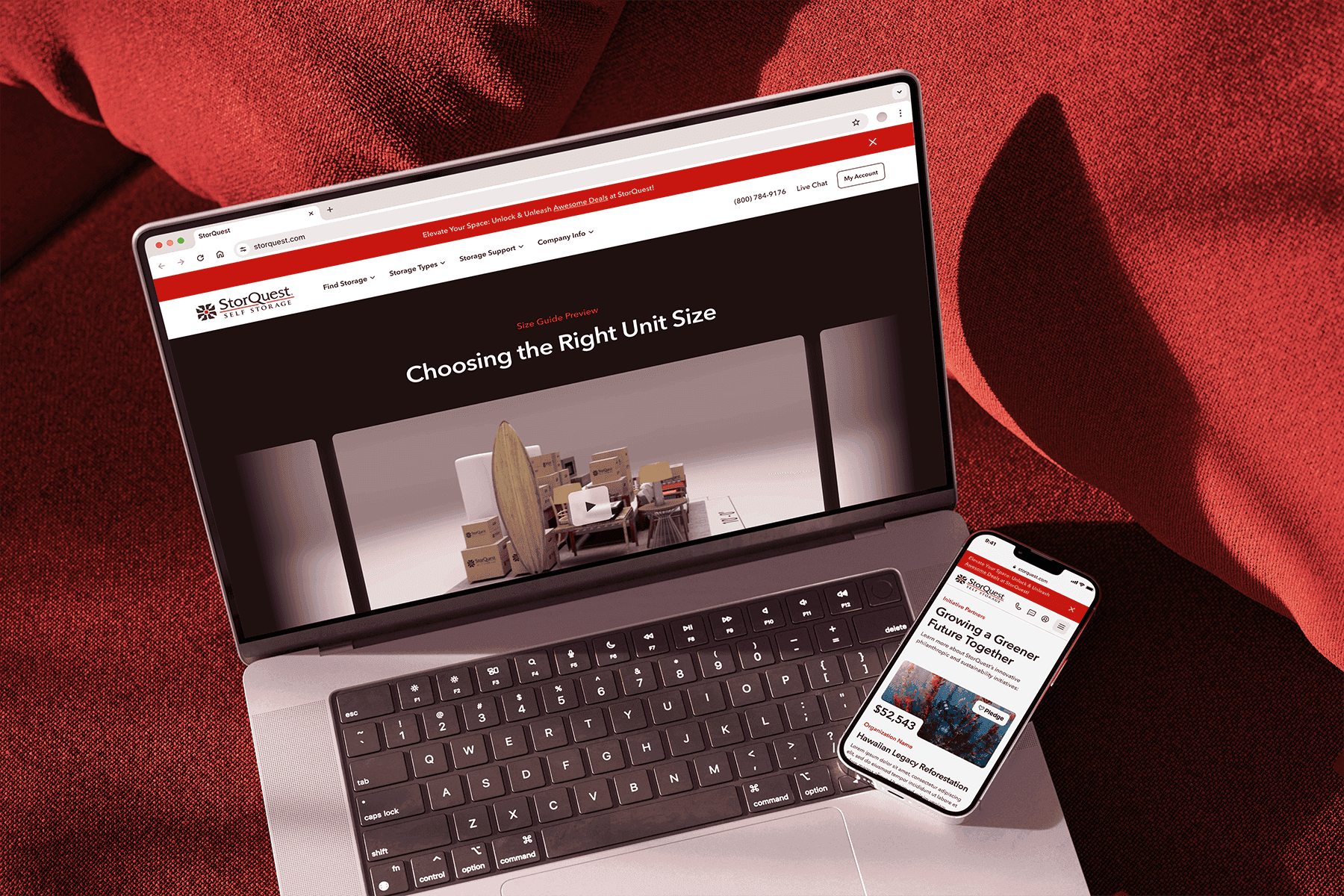
StorQuest's home page in June 2024
Immersive experiences, thoughtful interactions, and subtle flourishes.
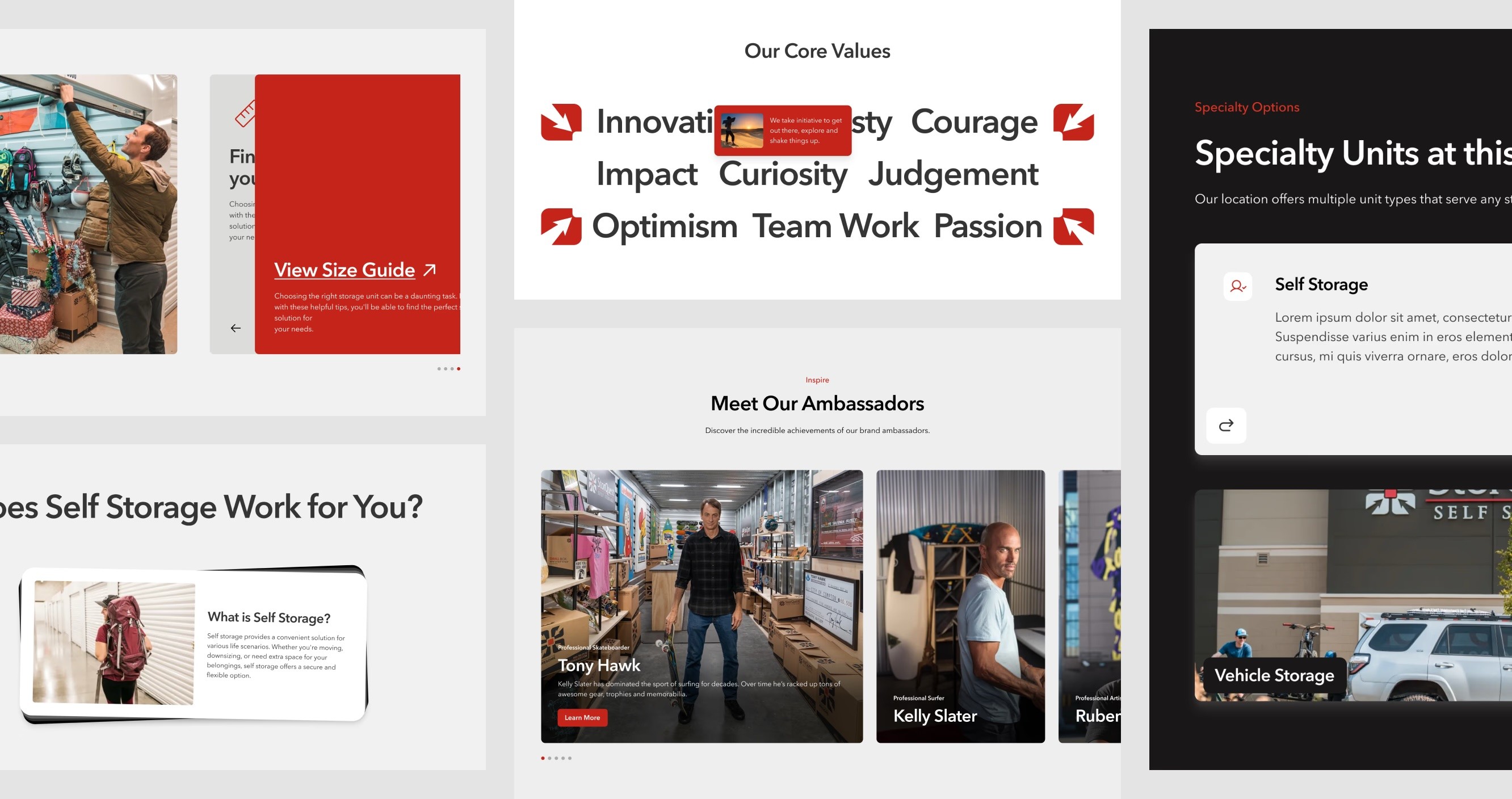
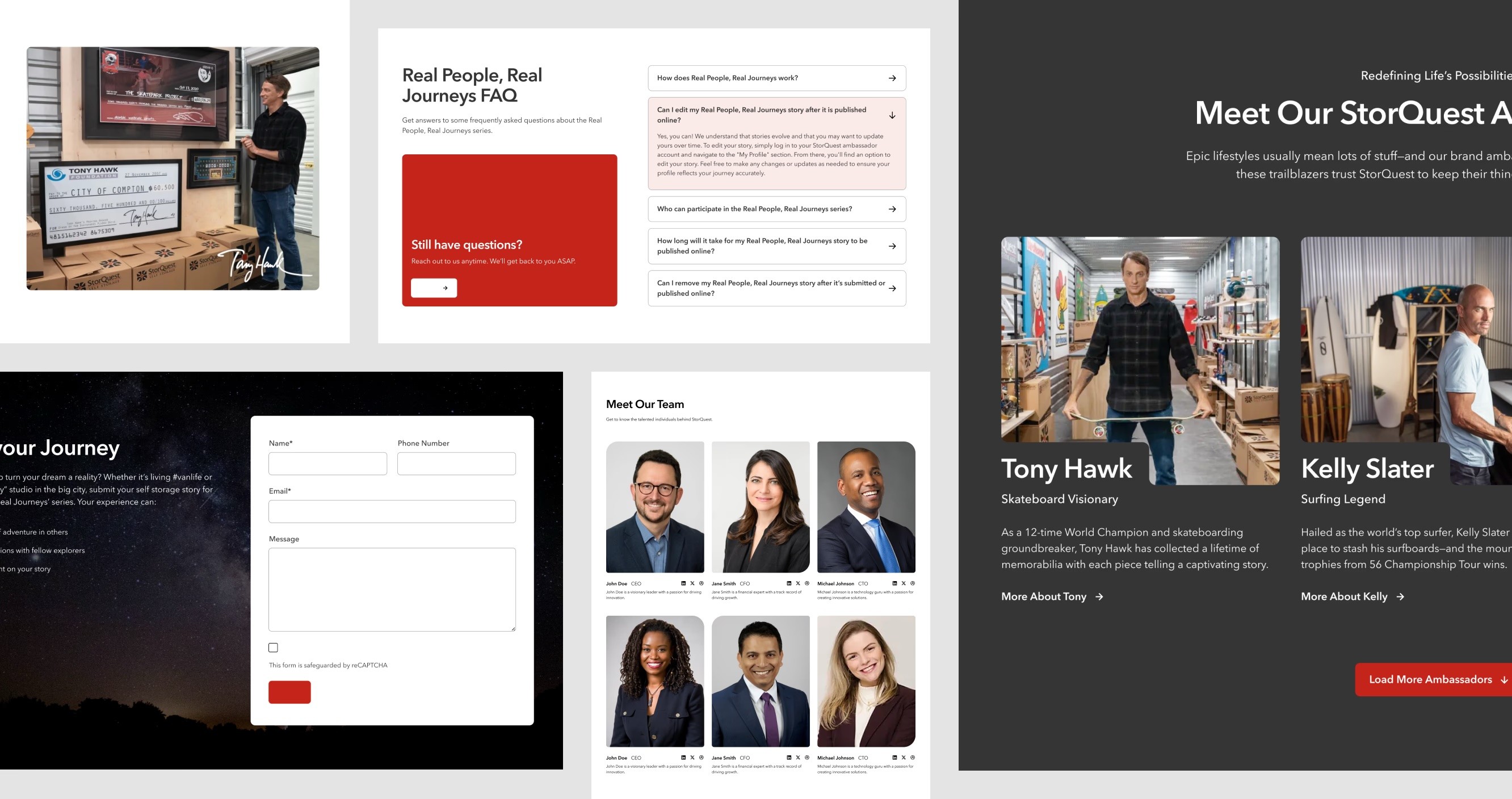
I took initiative to concept creative alternatives that would set StorQuest’s site apart. These designs were well-received by both the Red Door team and Storquest, with several making it to the final design.
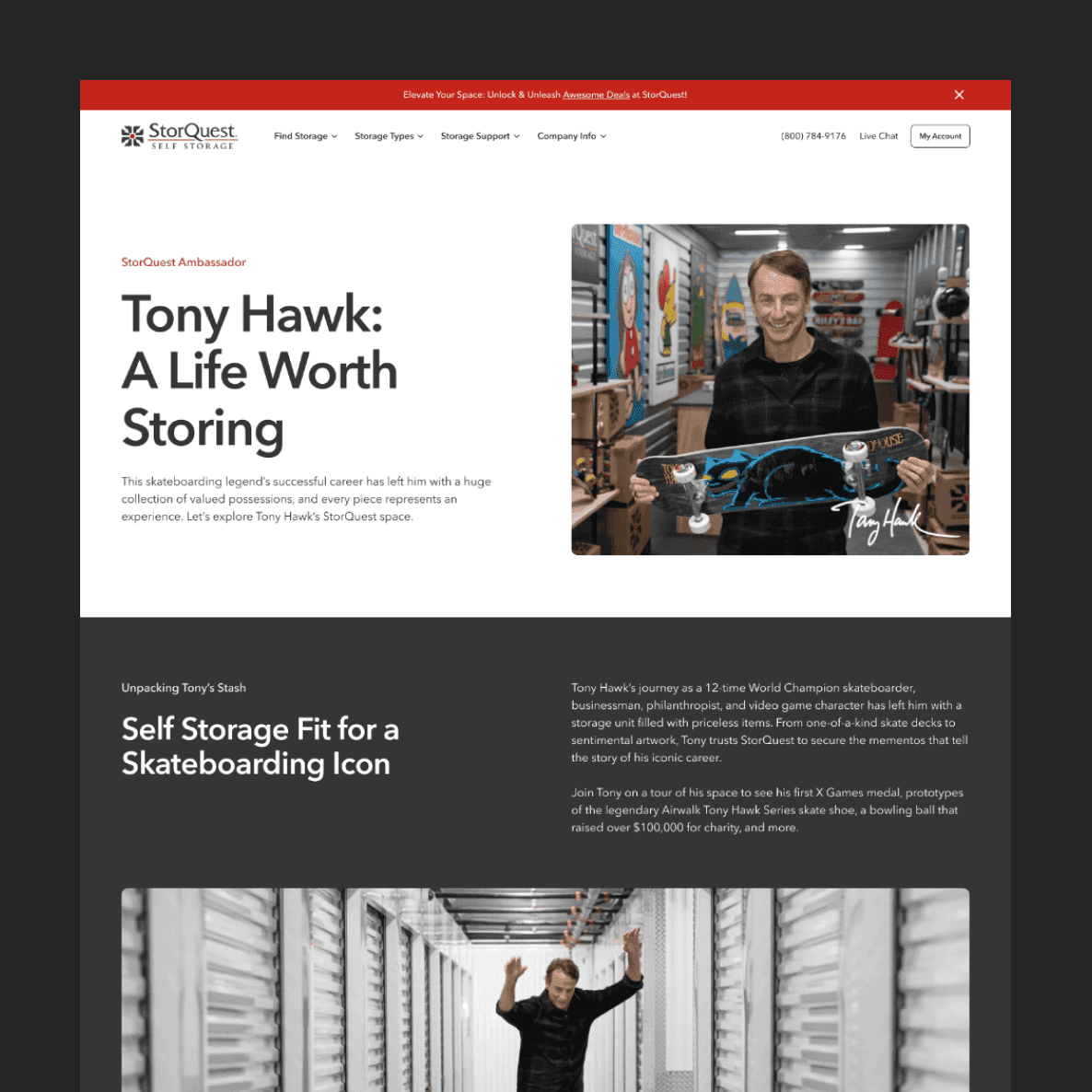
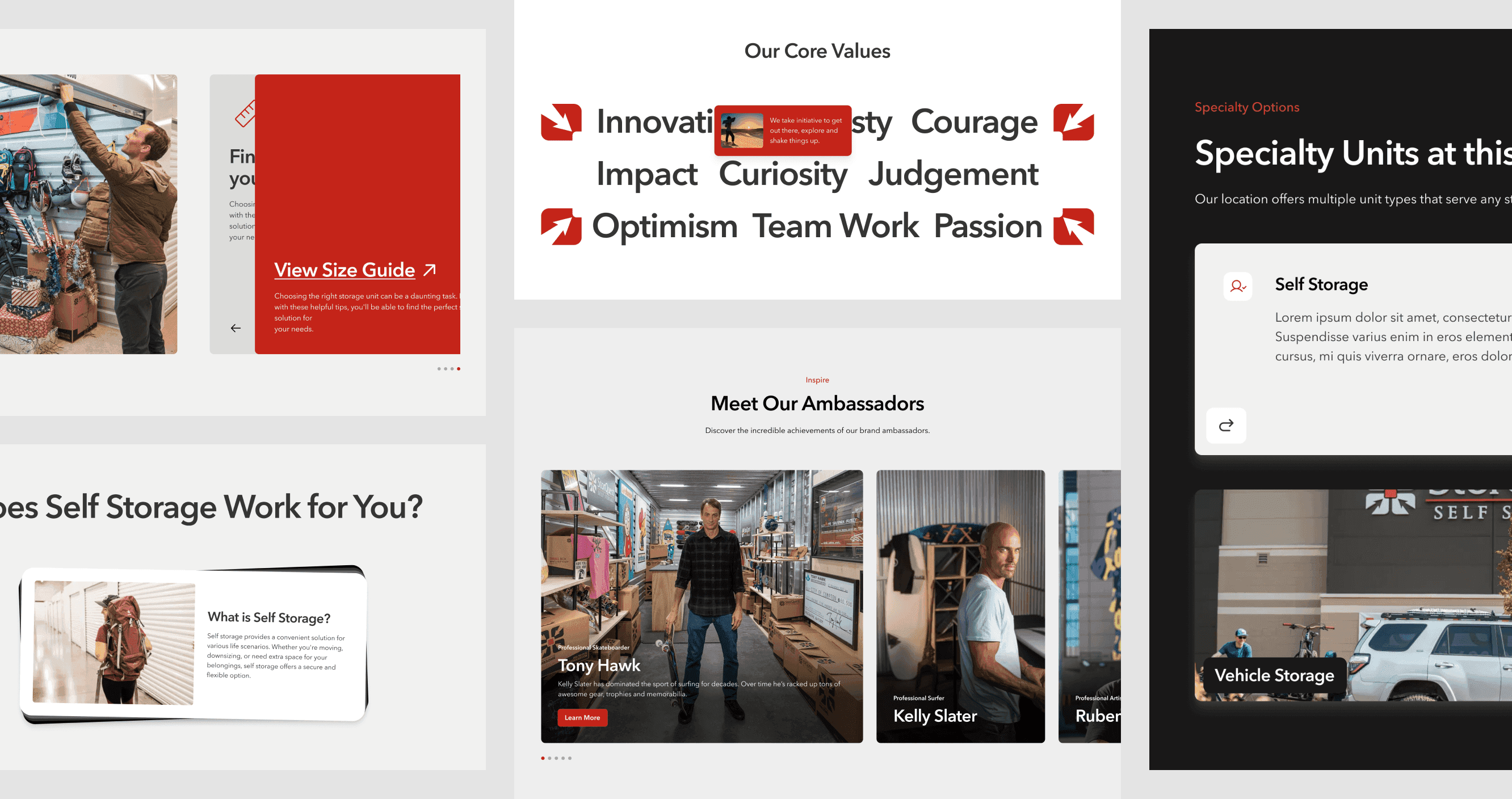
Here are a couple of my alternate designs:
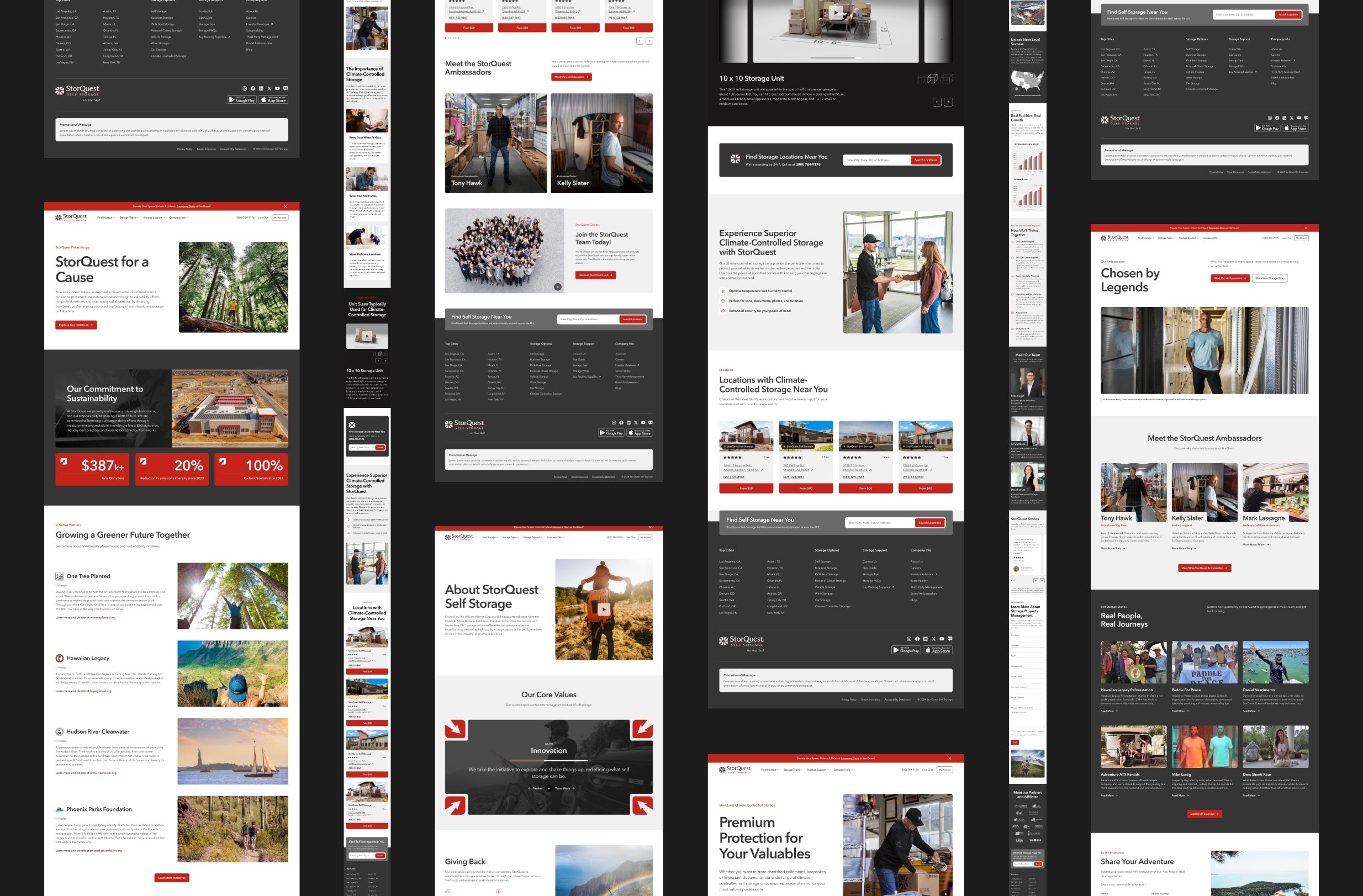
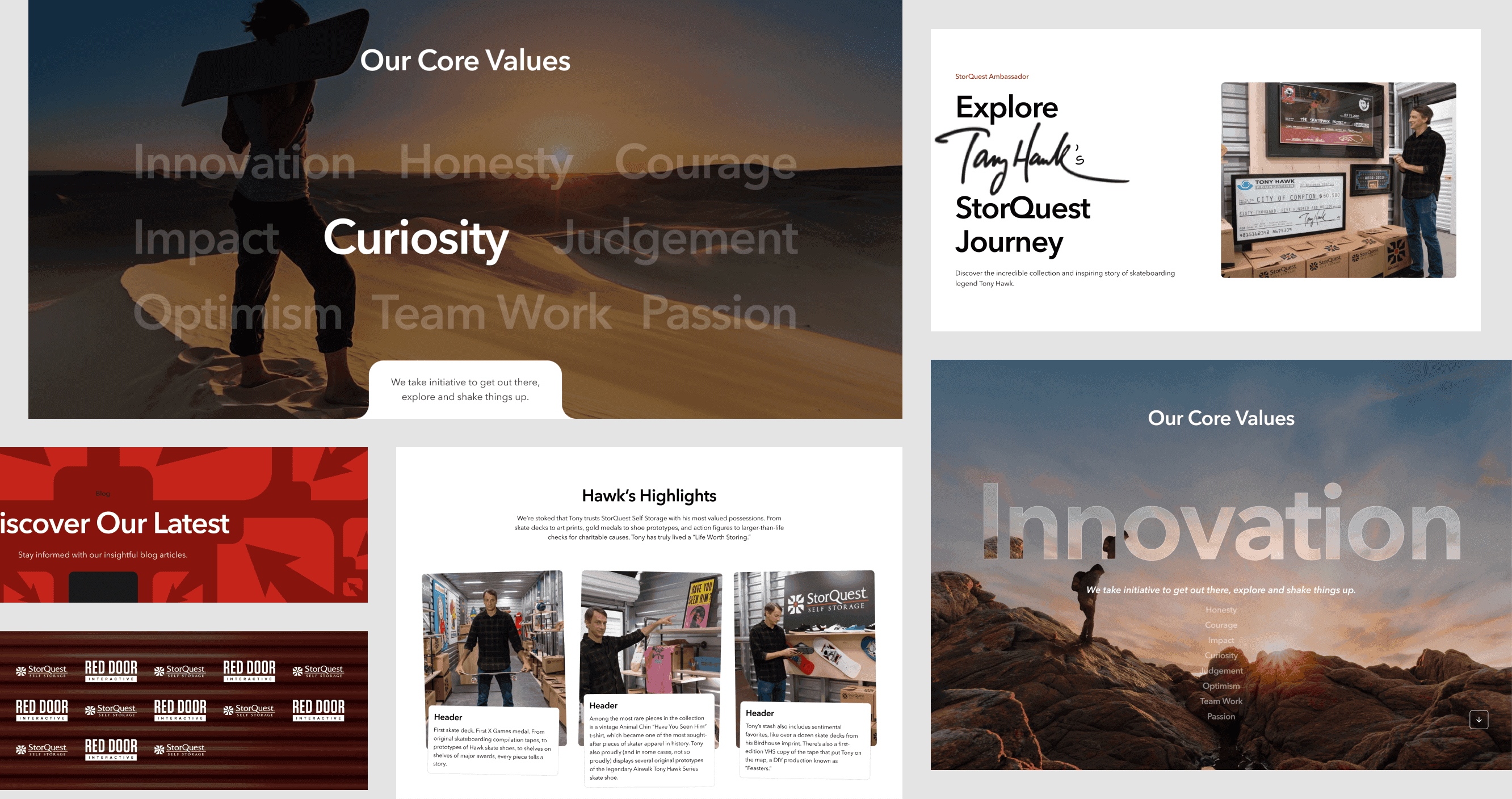
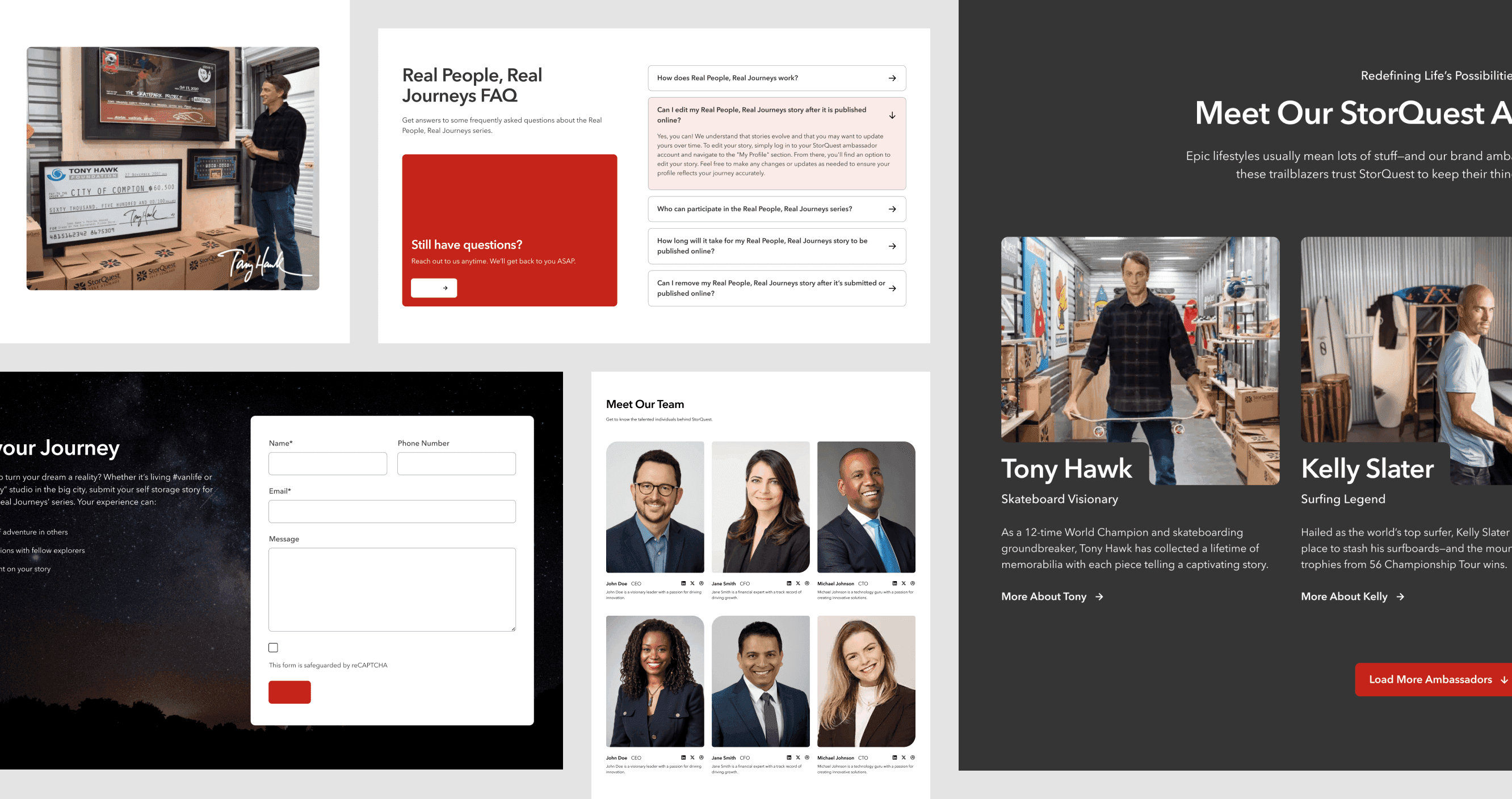
A couple of our redesigned pages:
Happy client and happy teams
In post-launch surveys, StorQuest’s marketing team noted a 40% increase in brand alignment and stronger customer recall of the site’s look and feel compared to competitors.
The Red Door team was also thankful for the designs, which has helped us maintain good relations with StorQuest and deliver a redesign with elements they love.
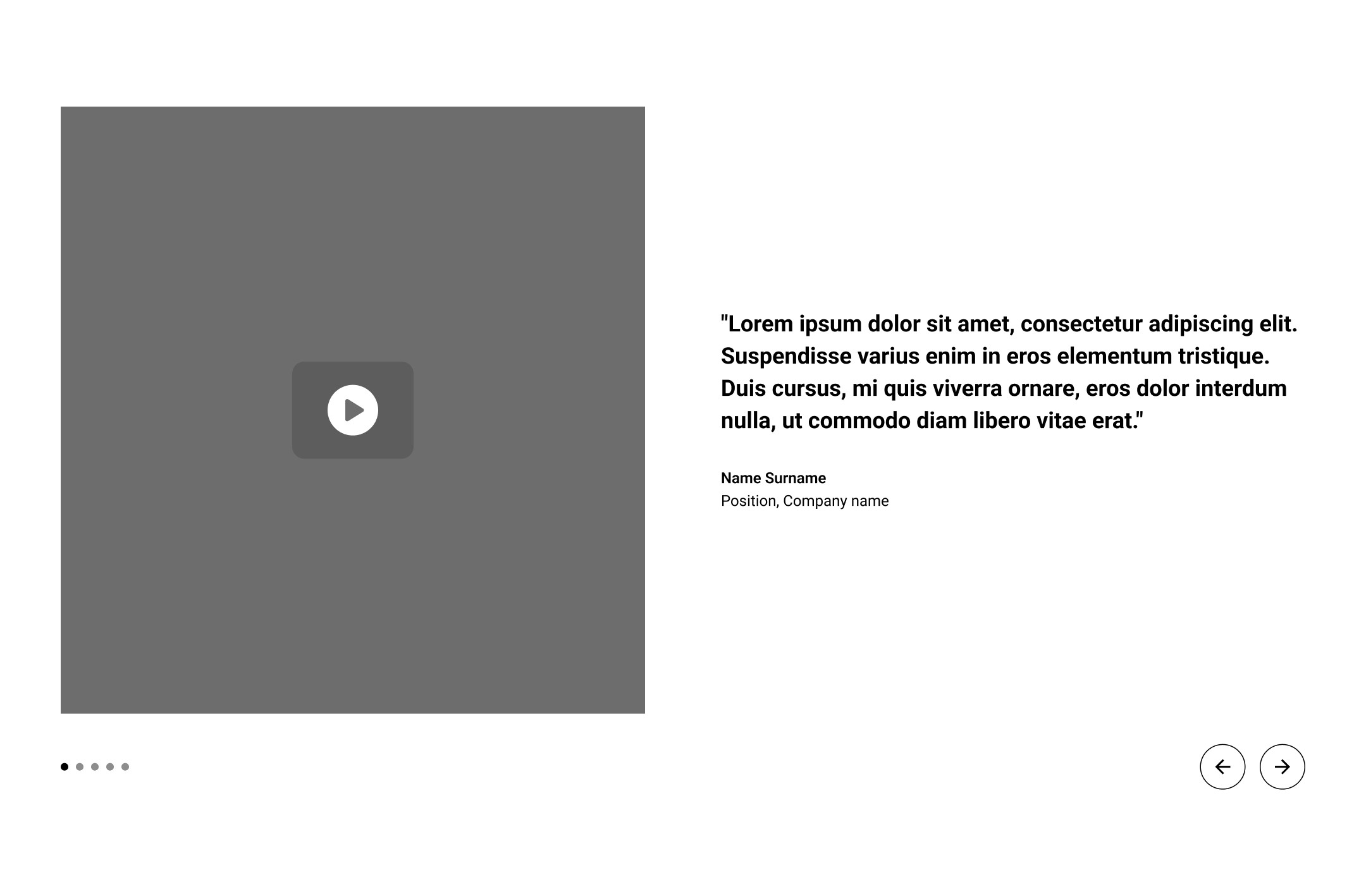
"We couldn’t have gotten everything made so quickly and the design direction improved without your help @Joy Alemu! You did an excellent job taking on client work!"
"I really want to thank @Joy Alemu, who made a massive contribution in getting us there!"
"Fantastic job! This was a huge undertaking and I felt you really pushed the design capabilities We received great feedback on the designs!"
Cody Leibert, Red Door StorQuest PM
My Individual Contributions
Creative Alternatives,
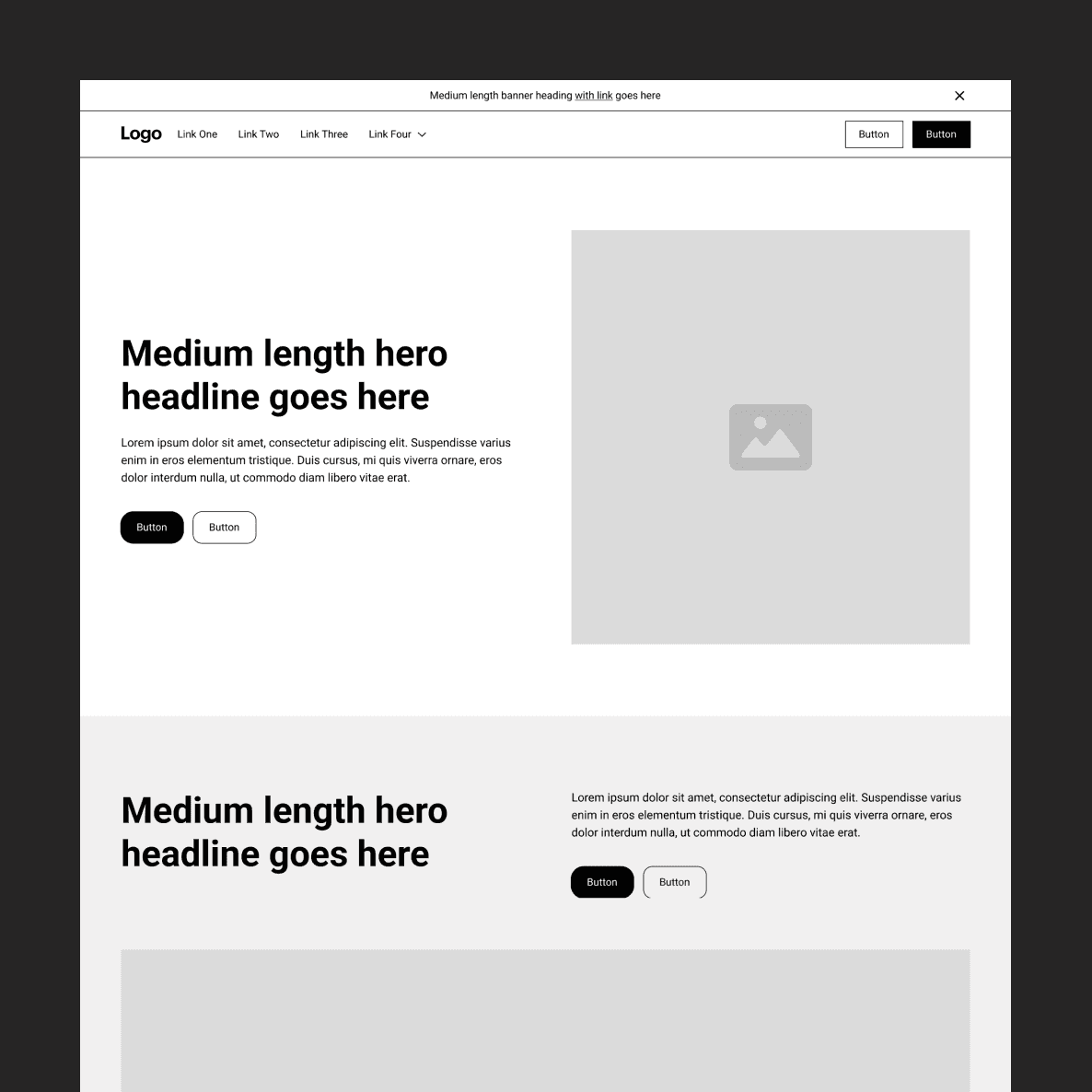
Responsive Wireframes, Hi-fidelity Pages
20+ wireframes, collaboratively
20+ hi-fi pages, collaboratively
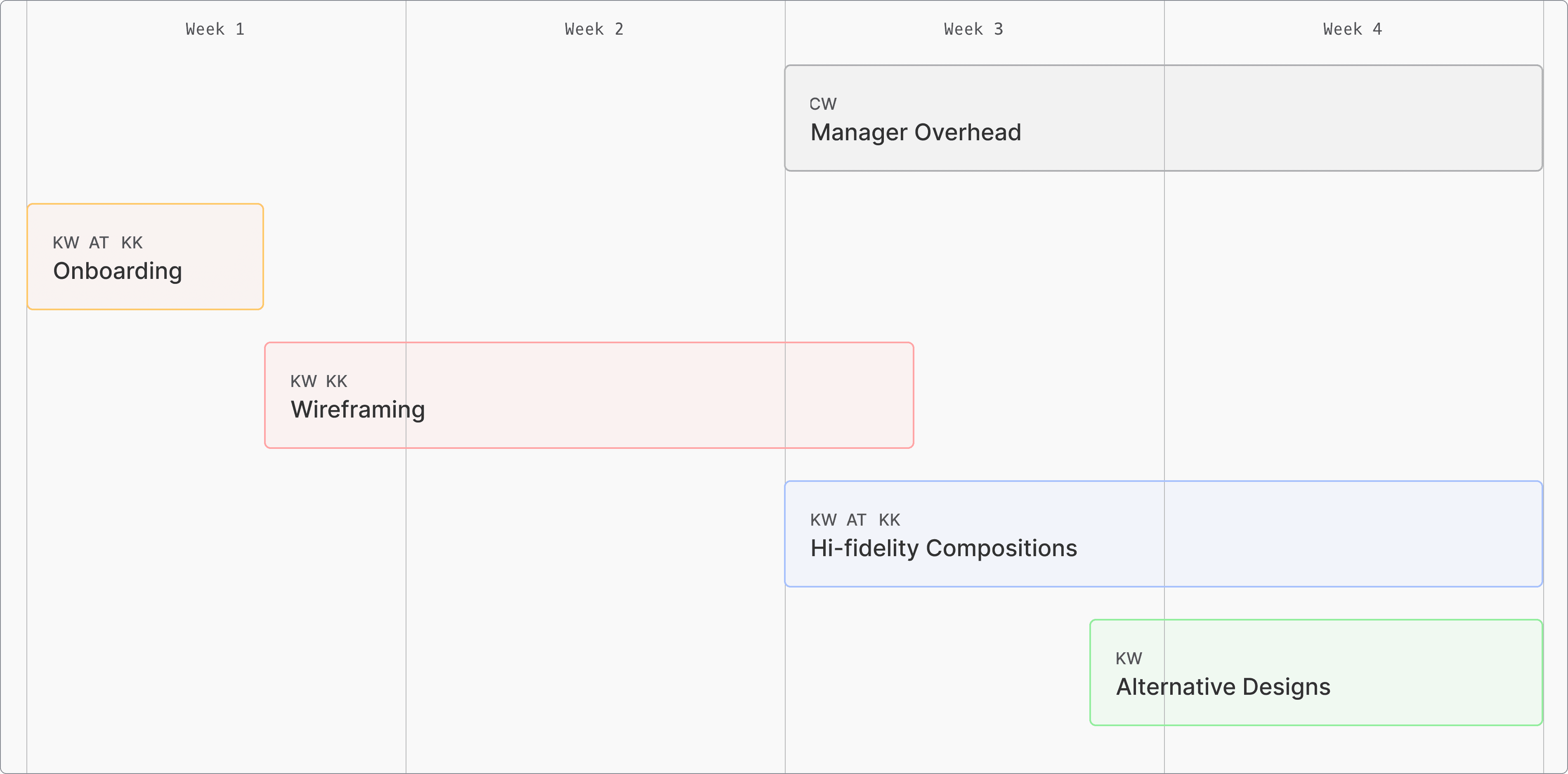
During my first 121 with my manager, I asked how I could be a team player at Red Door. Candice shared a lot of valuable advice, but “Be resourceful” stuck out the most.
When my manager (CW) and senior designer (AT) left for a 2-week PTO within my first week on the project, I was resourceful. I watched client recordings, dug for briefs, and scheduled alignment calls.
Taking initiative to design alternatives
I heard that StorQuest had been adament about a redesign that captured their company's essence. Our current designs were professional and functional, but StorQuest wanted their branding to shine throughout the redesign.
It was both a business and design opportunity to design these alternatives: I had finished my tasks early, and creating alternatives would be valuable design experience and also provide value to our agency-client relationship.
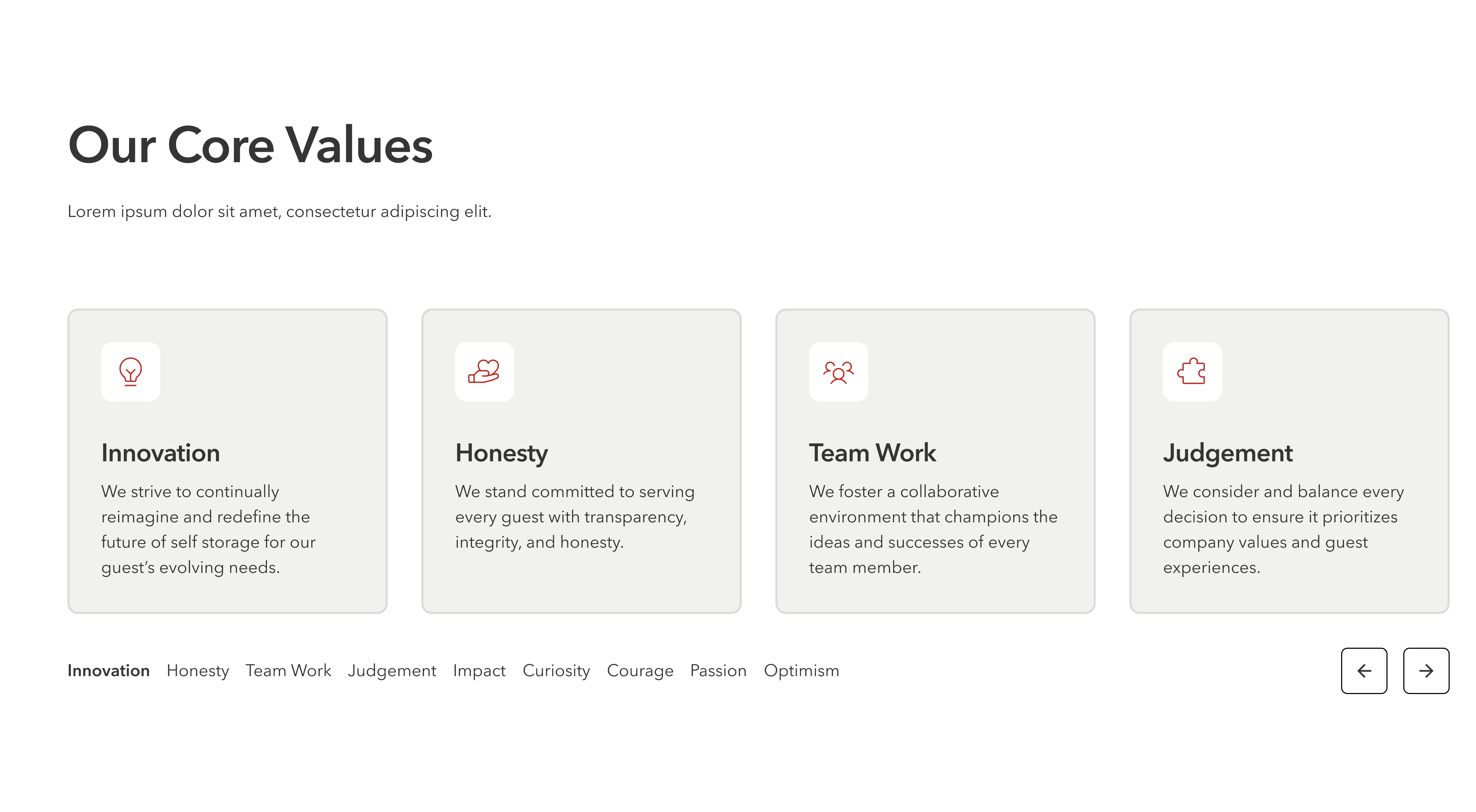
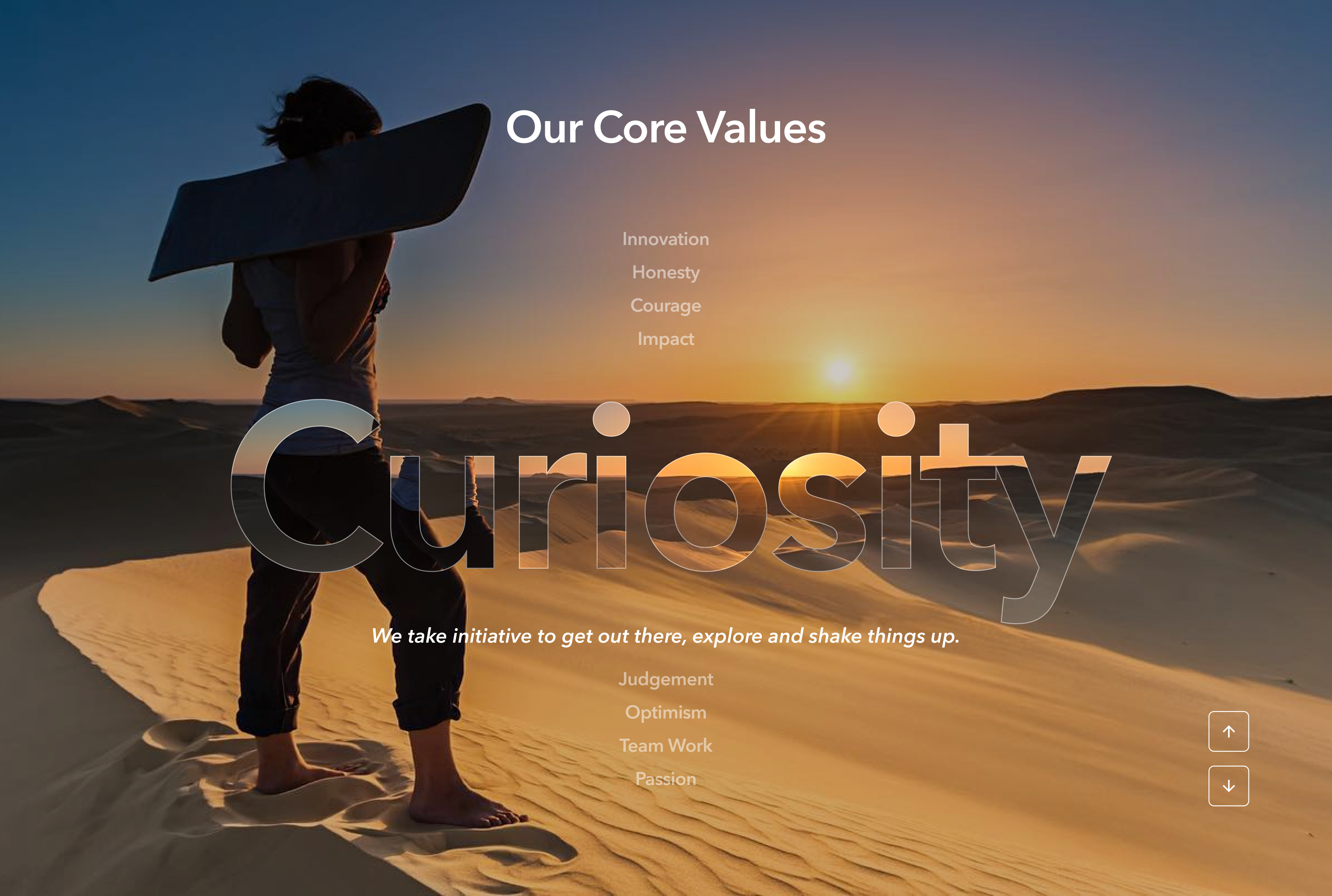
An early version of the core values section, before StorQuest-glamification
Learning to prioritize accessibility and function over aesthetics
When I first started ideating alternative hi-fis, I approached it as graphic design in an attempt to make them more customized and "not cookie-cutter."
I learned quickly that this approach failed to be cohesive with our visual system because it lacked accessibility for web readers or failed WCAG color contrast.
An early alternative that was visually engaging but terrible for the web
Here's a couple of my first alternative designs, which had layouts that were either inconsistent with our design style, difficult for dev, or had major accessibility issues.
With feedback, I started to simplify yet personalize experiences through simple interactions, like hover and scroll effects.
With feedback, I started to simplify yet personalize experiences through simple interactions, like hover and scroll effects.
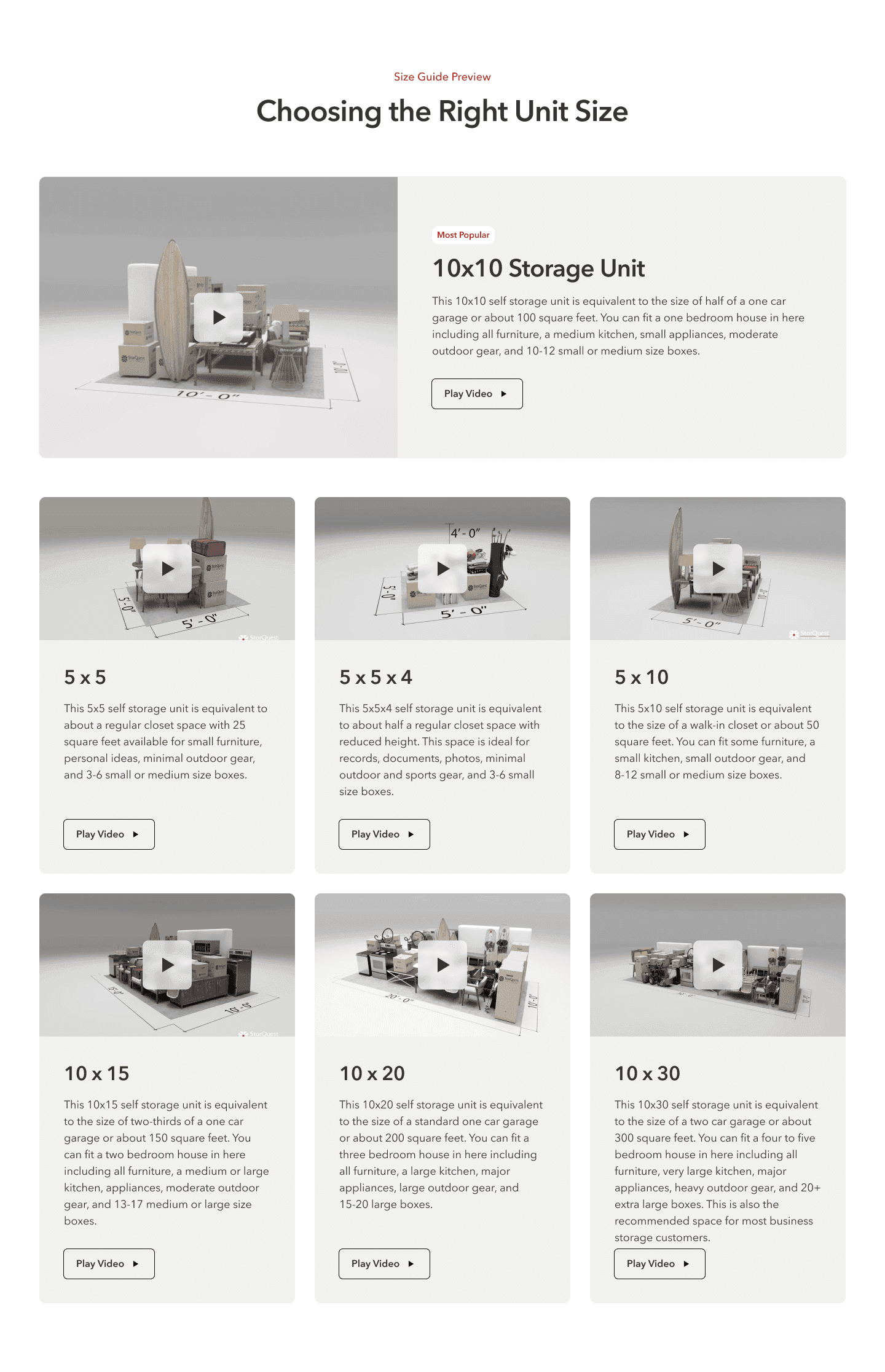
The Size guide is one of the many page sections I found opportunities for a creative redesign. Below is the original StorQuest size guide:
Red Door's redesign was much more readable and organized, yet it still felt like an overwhelming page section because of the high density of text and videos. I saw an opportunity to put a creative spin on it!
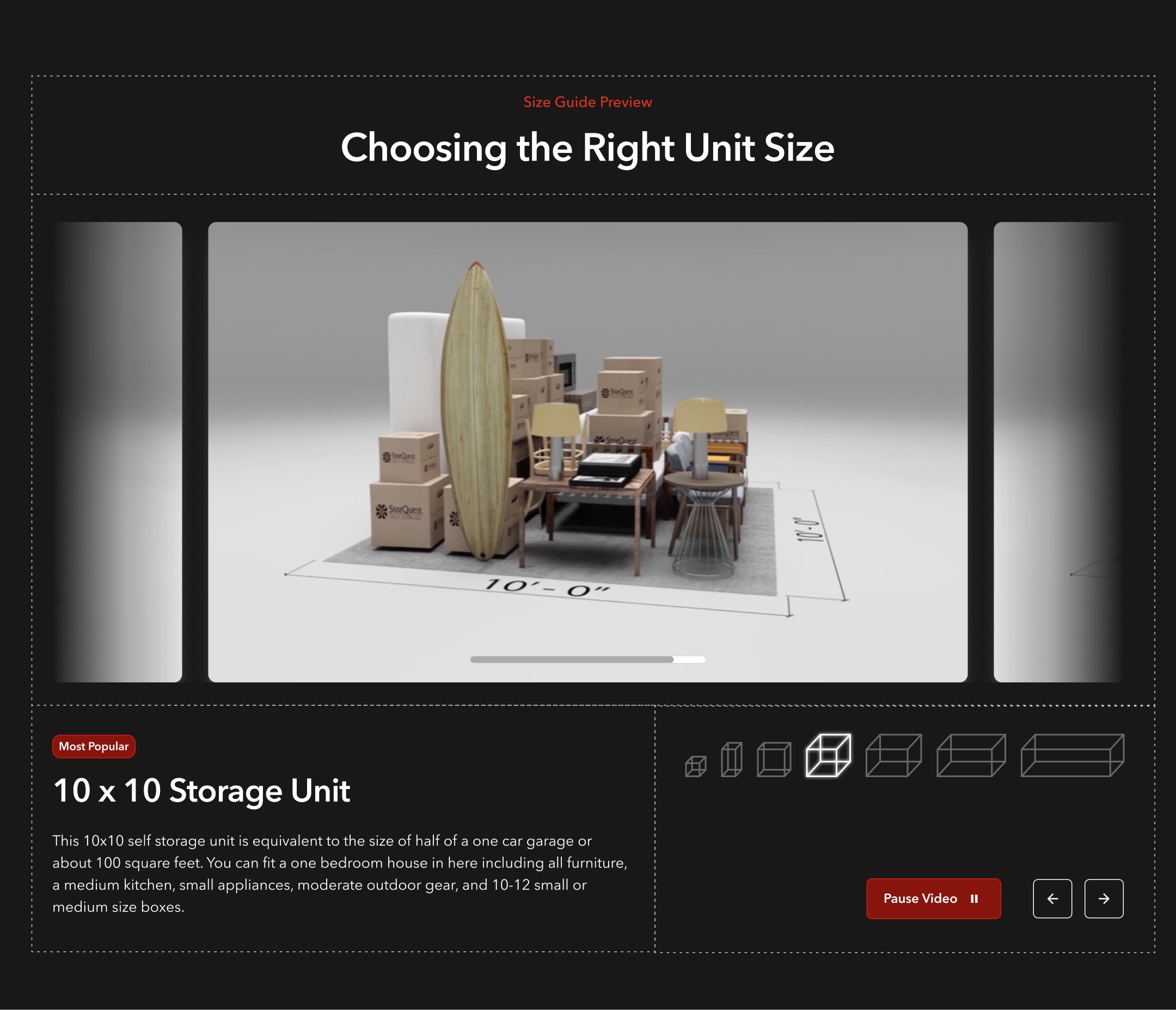
With this redesign, I streamlined how a user would find their size with a clear scannable flow: 1) watch the video, 2) read the dimensions in the title, 3) see additional sizes visually compared in the nav bar, then 4) read the body text for additional details.
Carousels for focused experiences
Carousels were common in our site redesign. So to condense the wealth of content in a familiar interaction, I used a carousel as a baseline. Not only do carousels have the flexibility to become non-cookie-cutter, the format helps users focus and explore content strategically.
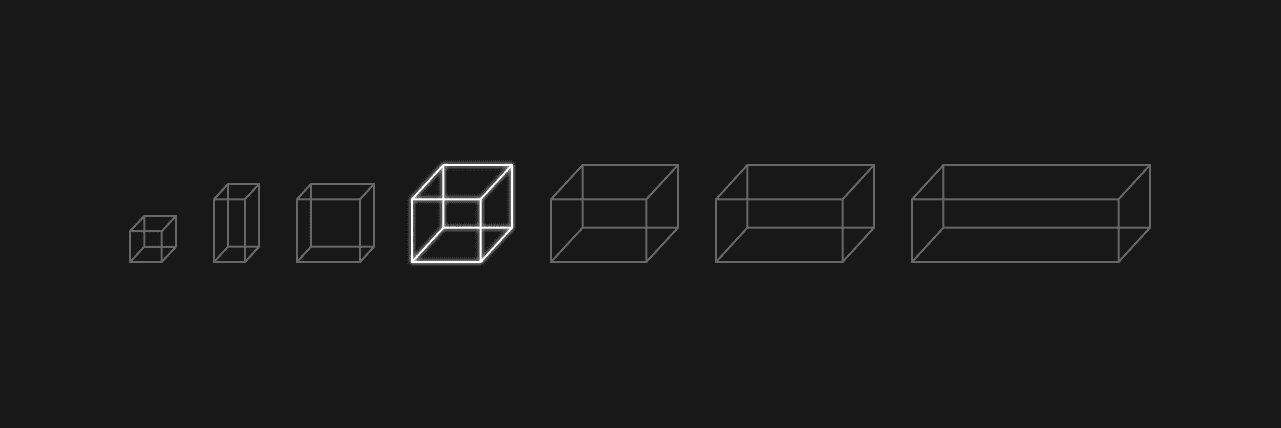
A visual and informative navigation
When I read 5” x 10” and 10” x 30,” I wished I knew what that meant visually.
So I did exactly that–I created icons to indicate the sizing options, which doubled as a navigation bar and tool to make visual comparisons.
After exploring a sizing option, users might think, “okay, I just need something maybe double this size,” then find an icon double in size. This makes finding the relevant size more intuitive and quick.
Clear hierarchy that guides users
The large video is the first focus, because it’s easiest to understand spatial information through video. Watching the video would remove the need to read the text, but reading the text might not do the same.
After watching the video, the user might want to read more or explore another size. Using proximity rules, grouping the sizing information on the left and global information on the right makes it clear where users should look for their next action.
Additionally, by making StorQuest’s recommended size (which is also the median size) the default, users only need to explore 3 more sizes at most.
I wanted to make this module immersive because it was an important user flow in the StorQuest site.
Our designs had mainly white and off-white backgrounds, so I used off-black to draw users out of their typical experience and invoke the feelings people get in a movie theater or netflix scrolling session–an experience that feels inviting and personal.
Breaking out of the"cookie-cutter" designs
I had the opportunity to present my designs during internal meetings and receive feedback. Although only a couple of these alternative designs were used or iterated upon, our agency's team was grateful for this extra initiative.
With these alternatives, the agency was able to maintain good relations with StorQuest, with StorQuest even expressing that they were grateful for the extra effort of providing a range of alternative designs.
The alternative size guide, which will be shipped as well!
Going the extra mile: Filling the
cracks in a cross-functional team
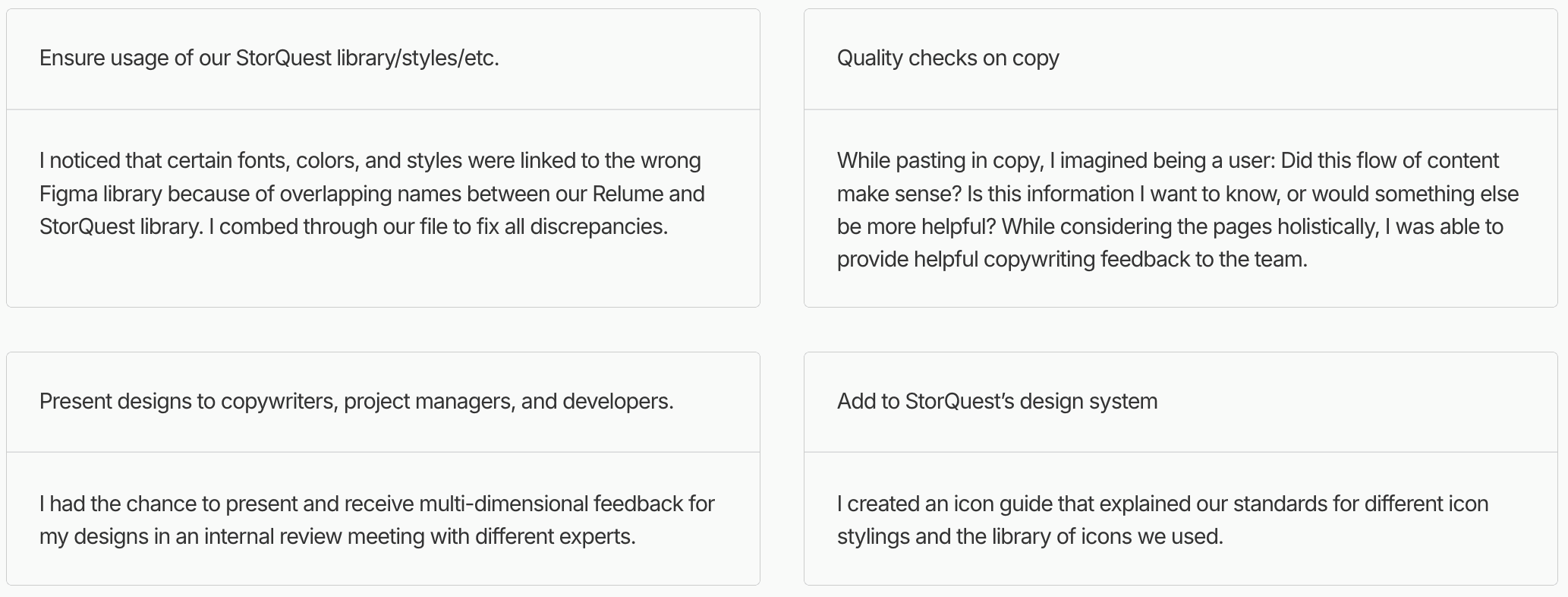
With a small design team, we wear a lot of hats. I liked this because I could grow various skills, and my work attitude is very much “I want to take on more so I can learn.” So in addition to the original design work I was delegated, I also did the following: