Designing frictionless flows for service based startups
As product designer, I researched and designed for a small startup as we pivoted to a subscription model and rebuilt our onboarding experience. Subsequently, we brought in $19,000 of revenue + a discovery-to-conversion pipeline decrease of 54%
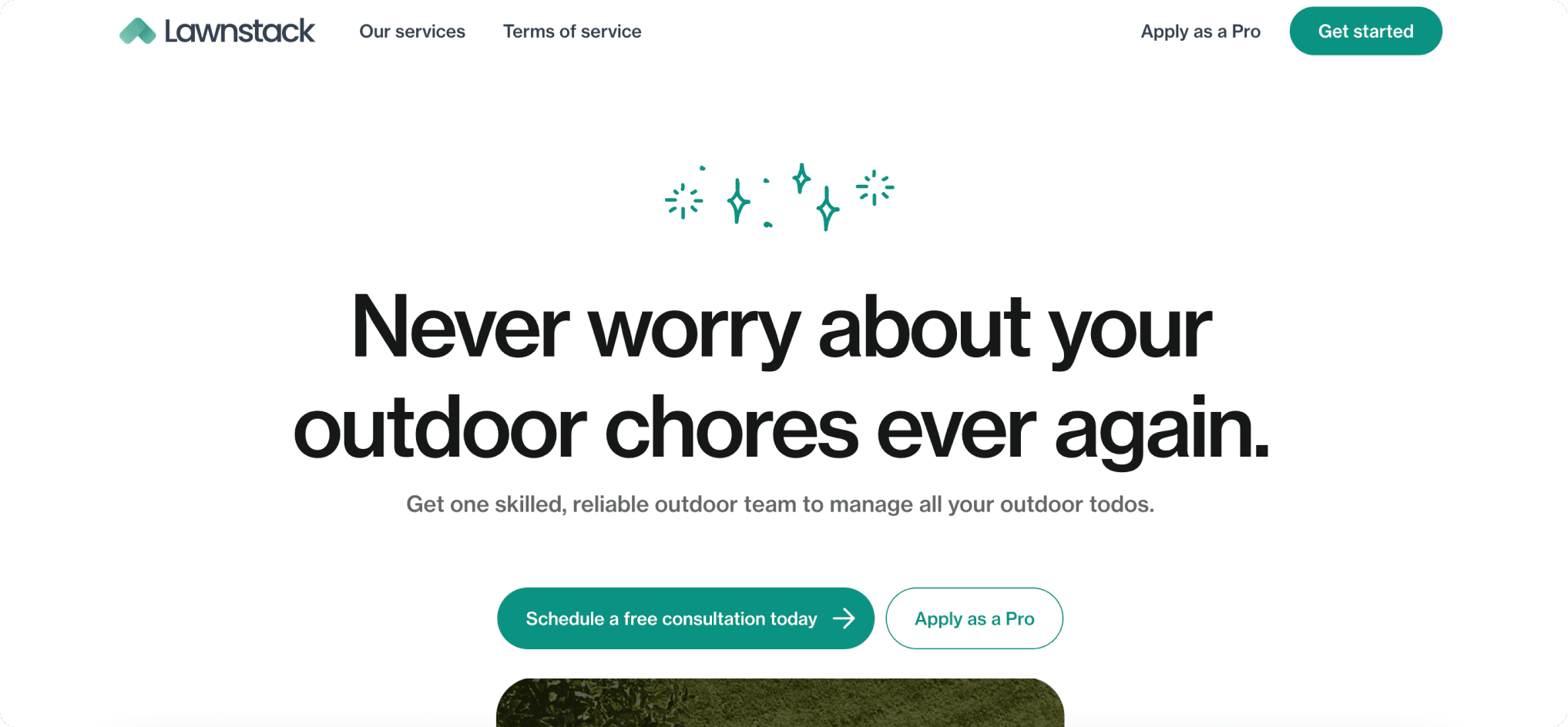
AllSeater's home and pricing pages, which minimally shows the product
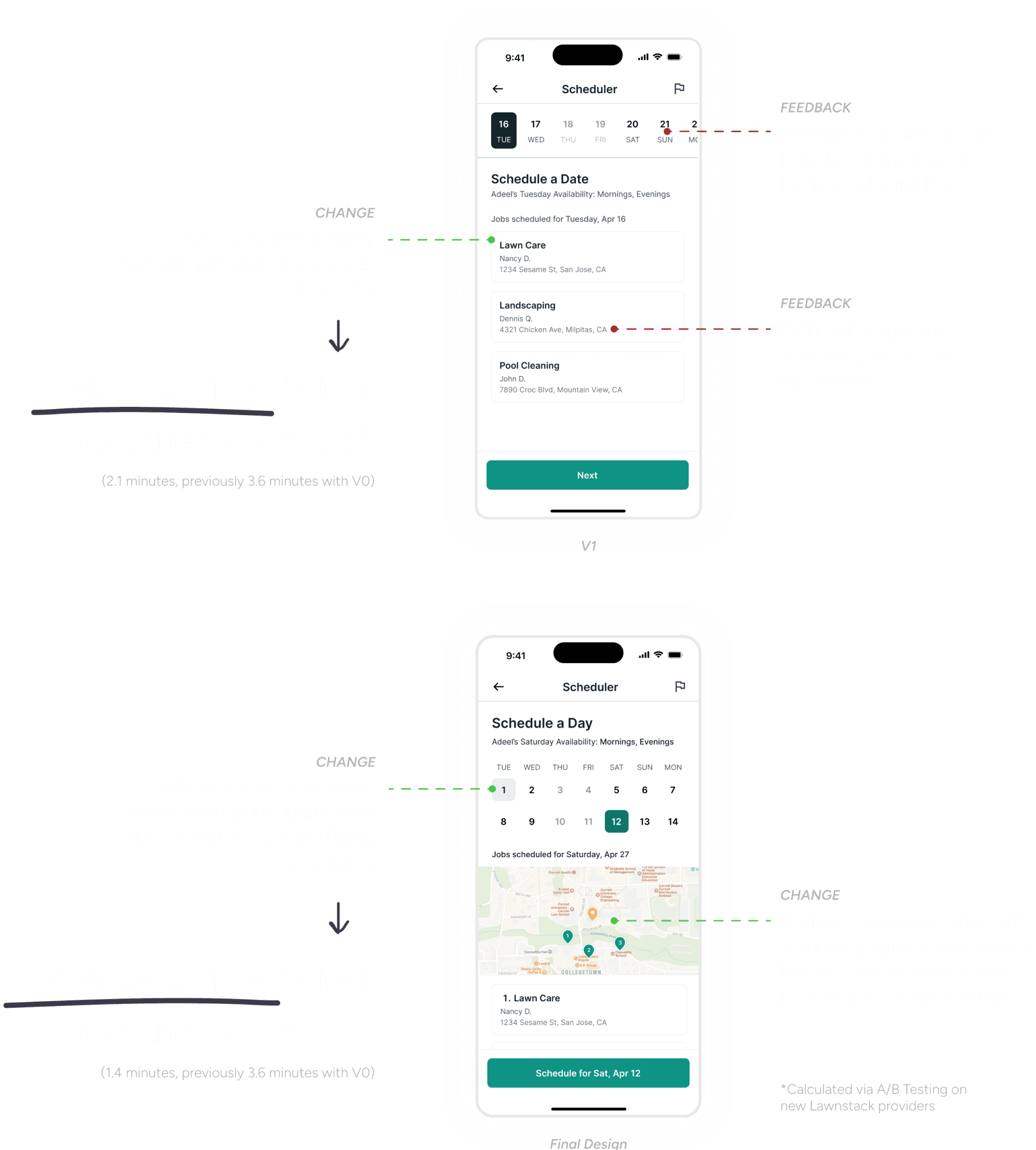
Schedule jobs according to proximity
of other existing clients.
Have a visual representation on where your already-scheduled jobs are to see which day will provide the most optimal route distance-wise. Easily compare and contrast by selecting different dates.
See an overview of the work you have for the
day so you can plan.
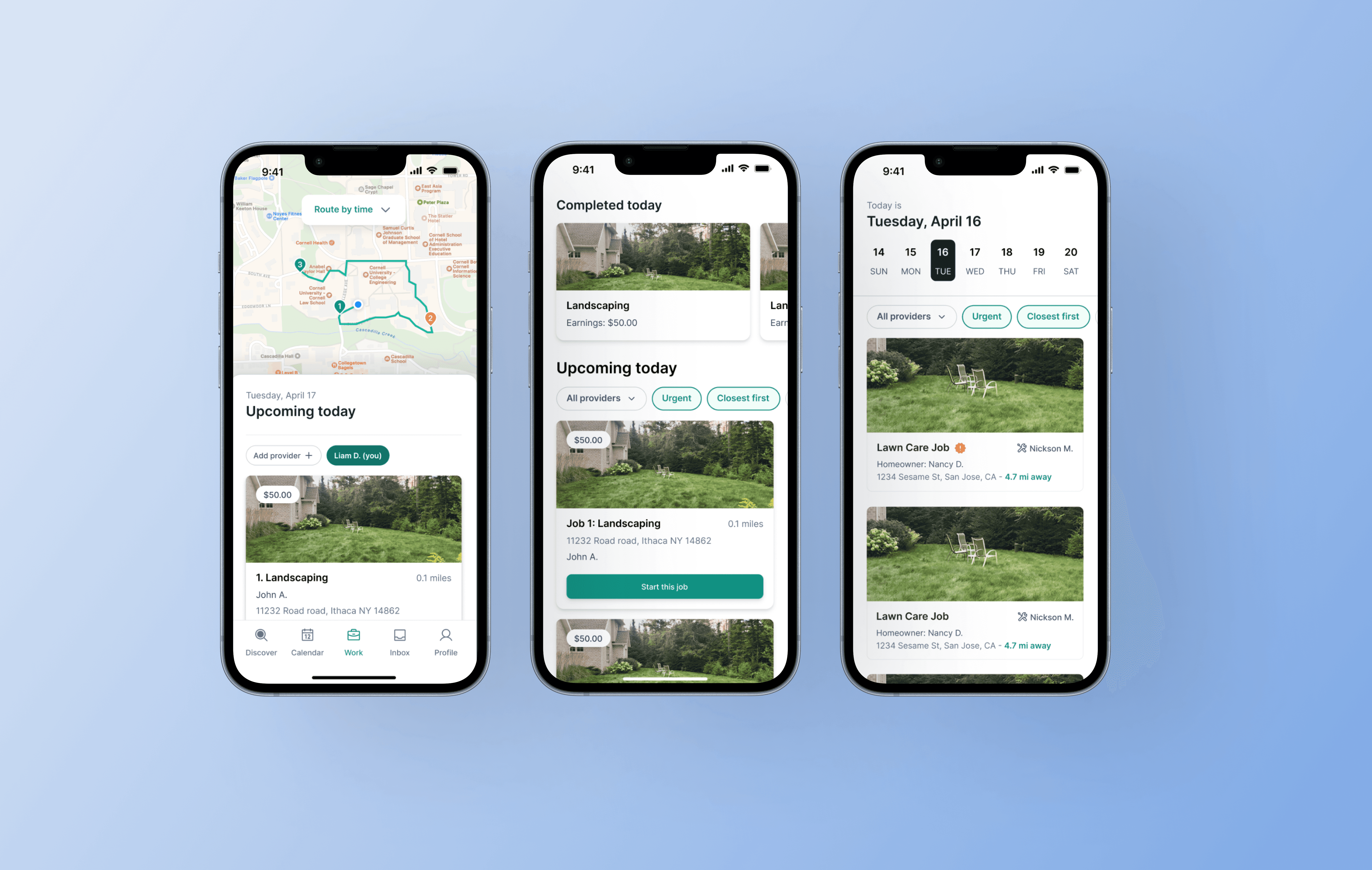
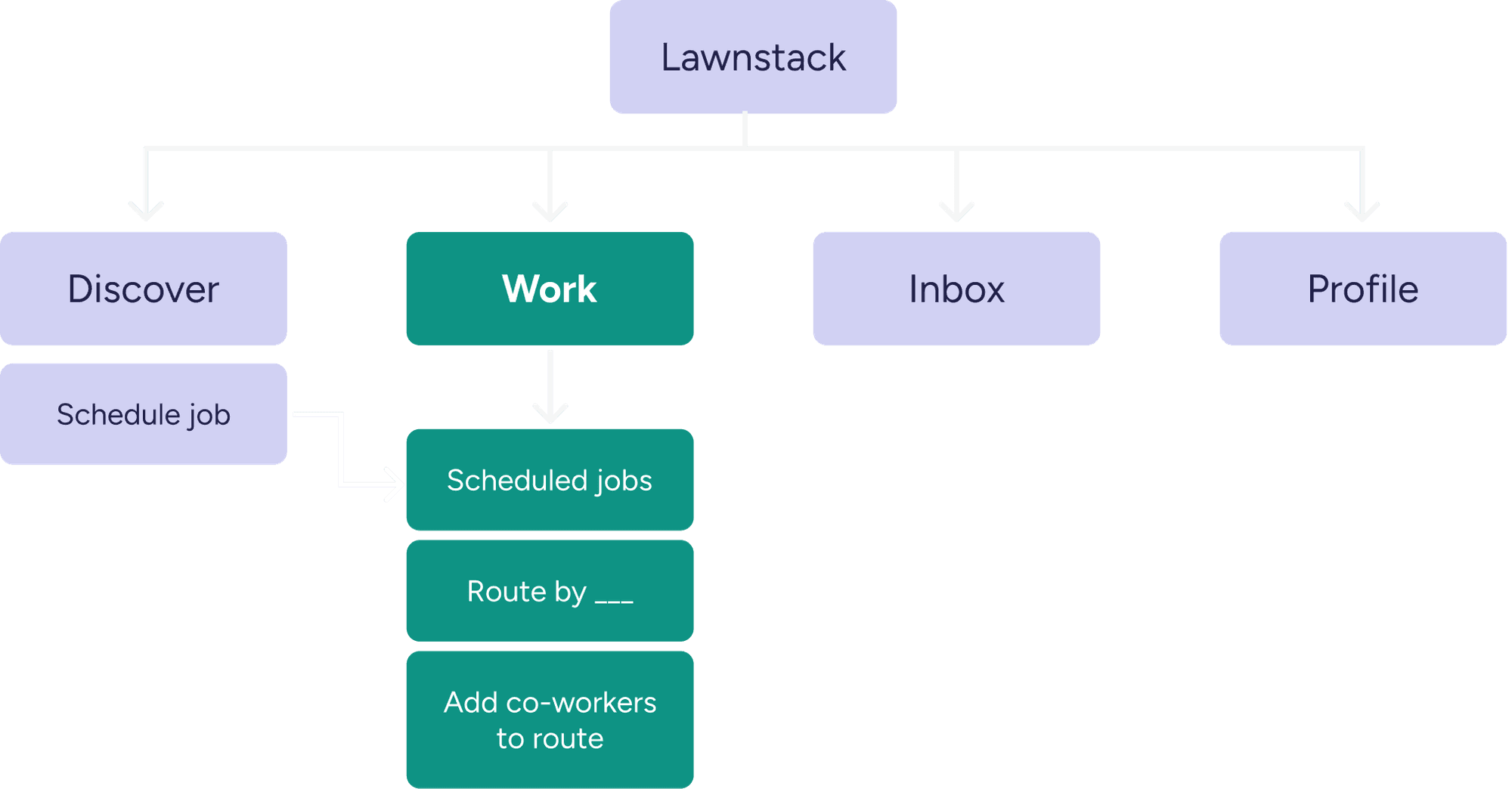
A place where all of your jobs for the day will be displayed. View details of individual jobs, submit before and after photos, and get paid upon completion. This is where tasks are centralized on the app.
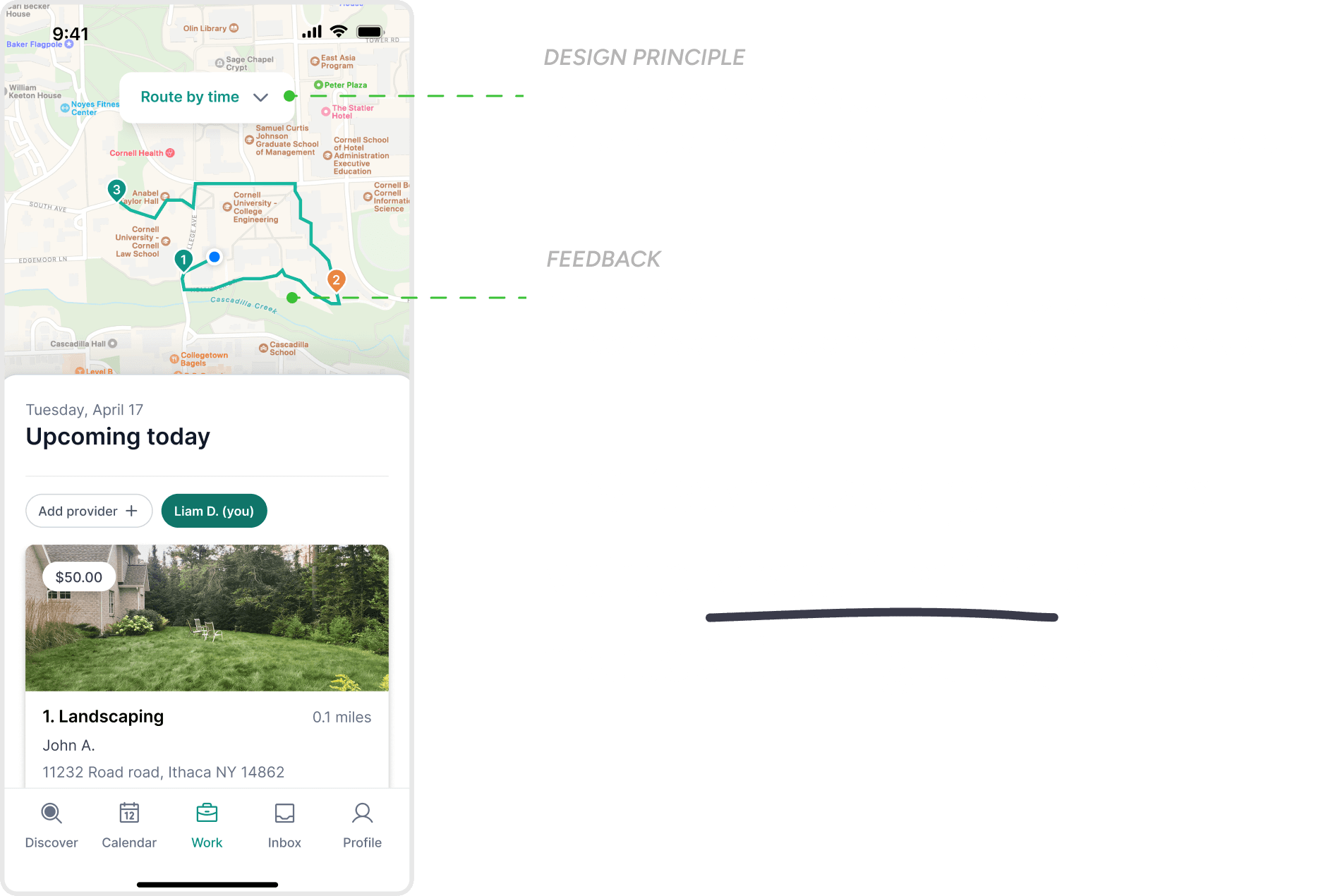
Find the route that best suits your current conditions.
A place where all of your jobs for the day will be displayed. View details of individual jobs, submit before and after photos, and get paid upon completion. Visualize your route on a map to find a path between stops.
Shipping Route Optimization for a 0→1 Startup
Shipped two provider-facing features that improved scheduling efficiency by 164%, reduced daily planning time by 3.4x, and supported Lawnstack’s operational growth during its subscription pivot, contributing to $19,000 in new revenue and a 54% improvement in the discovery pipeline.
I followed around a provider for a day
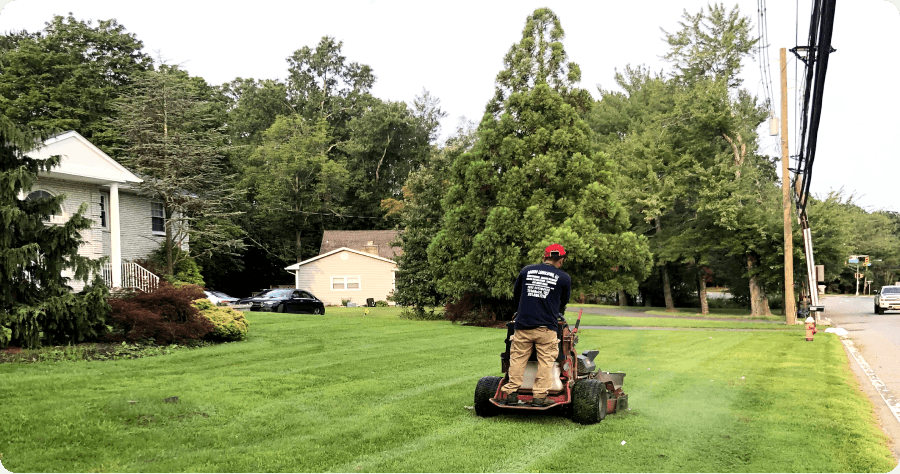
In order to understand their day-to-day process, I hopped into the truck of a lawn care provider. Through this, I gained insights on what aspects influence their daily schedules and workflow.
Rather than scheduling jobs in advance, providers select which houses they will go to that day.
In the first five minutes of their day, providers base their schedule on these three factors:
How close their clients are to each other. Closer homes means less travel.
Who they are working with that day (can spontaneously change)
Spontaneously assigned jobs that need to be done within the same day
It takes 3.4x longer to schedule a job on the app than via paper.
I user tested the existing Lawnstack scheduling feature on four existing providers on the platform.
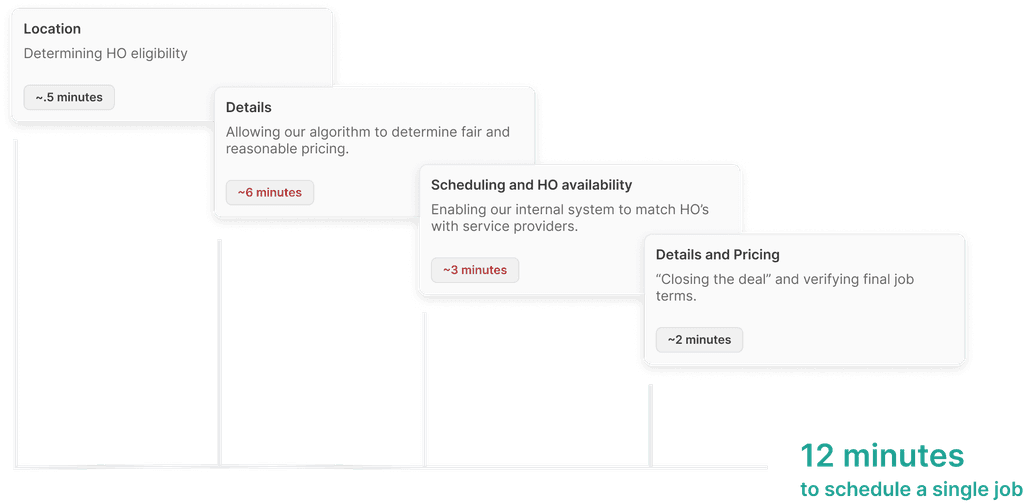
I found that on average, it took 3.7 minutes to schedule 1 job. Thus, to schedule 6 jobs for the day, it would take 22.2 minutes, which is a 344% increase from what a provider usually does via pen and paper.
This occurred because providers needed to consider their previously scheduled jobs in order to think about proximity, co-workers, and urgency.
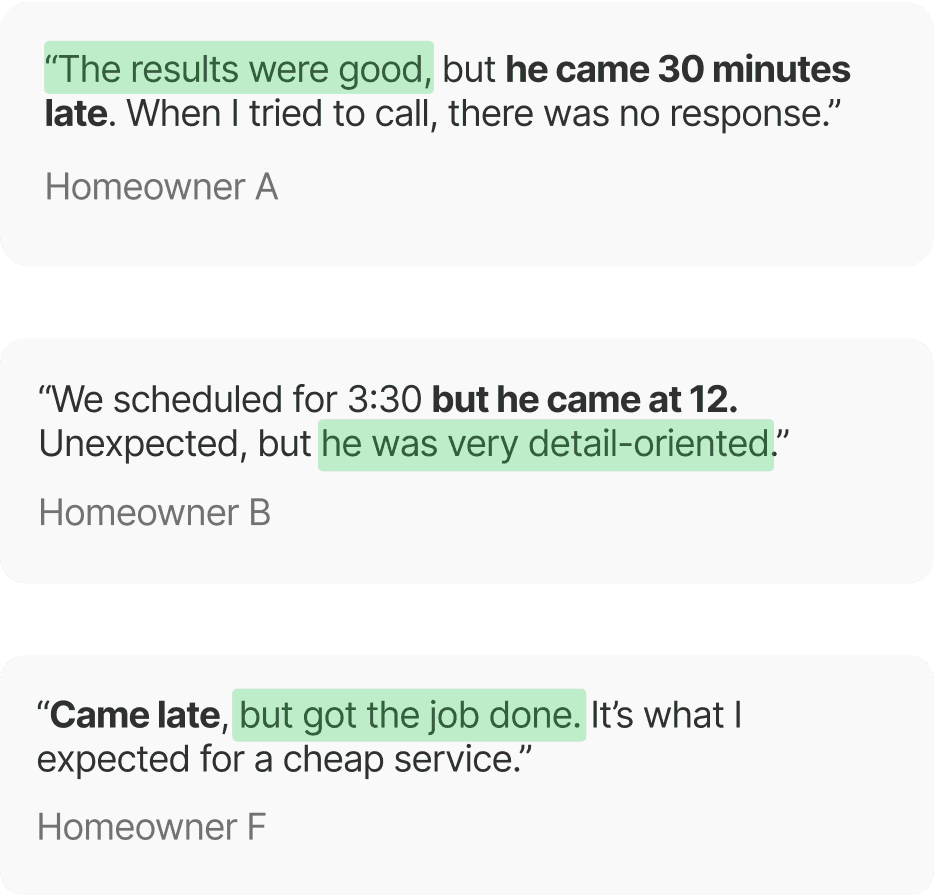
Regardless of punctuality, homeowners displayed satisfaction with the work being done by Lawnstack’s providers.
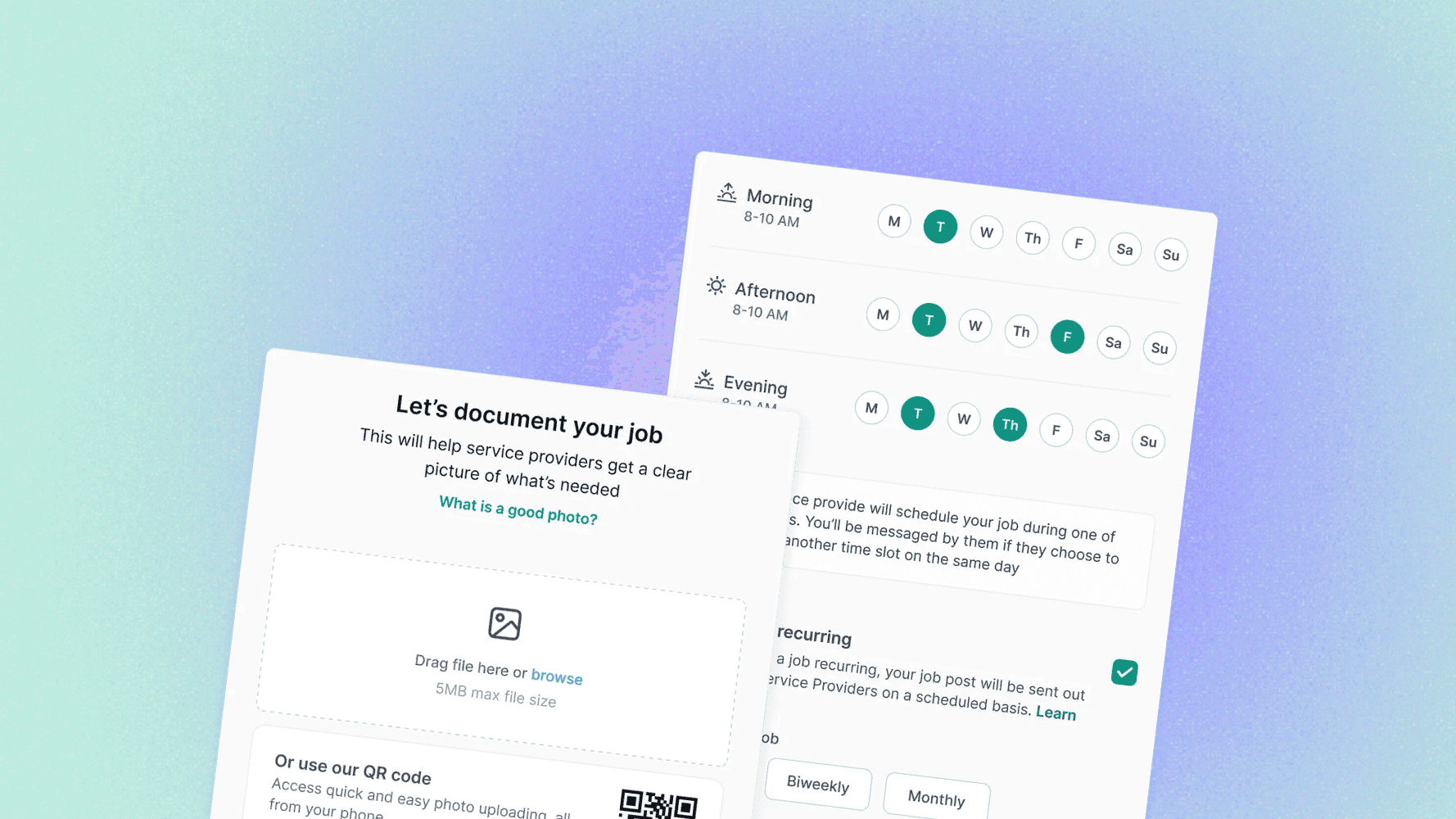
The original scheduling feature contained rigid time slots, which heightened homeowner expectation.
Providers organize their client work by day due to dynamic changes. Thus, to accommodate for these dynamic changes, I suggested a new post-scheduling feature that providers can use to plan out their route for the day.
How might we make the scheduling feature less disruptive and more seamless with providers' existing workflow?
In my first iteration, I made sure to firstly remove rigid time slots. Thus, jobs would now be scheduled simply by day. With this in mind, I also made sure to display jobs already scheduled that day so that providers can take proximity into account.
How might we accomodate for dynamic changes(co-workers and urgent jobs) that occur throughout the day?
Find your optimal route for the day
Create optimal routes best suited for your current conditions. A new urgent job you need to tend to? Select route by urgency. Want to find the next closest home? Select route by distance.
Re-adjust your route with co-workers in mind.
Easily incorporate your co-worker’s schedule for the day into your own without needing to manually compare physical addresses. If a co-worker ends up joining or leaving your truck, easily edit your route by adding/removing them.
Providers value visualization
Upon bringing my explorations to Lawnstack providers, 7/8 providers preferred a visualization of their route. This is because many providers also have jobs scheduled outside of Lawnstack, and therefore a visualized route allows them to think about ways to fit their external jobs into their Lawnstack route.
Building for a system and flagging issues
This project is a 0->1 design where I have the opportunity to collaborate with other designers, developers, and pms. Desiging for 0->1 has really helped me take ownership over my designs and understand how to balance feasibility with creativity, and ultimately, what is best for the user.