THE STORY
Using our phones before sleeping is bad. We know that, but still do it.
Existing solutions don’t meet people where they are. Our project started with the acknowledgement that our phones are stuck to us and people resist change.
Location
Cornell, Remote
Timeline
Nov 2024—1 month
Role
PM, Designer, Researcher
Team
4 Designers
THE STORY
Using our phones before sleeping is bad. We know that, but still do it.
Existing solutions don’t meet people where they are. Our project started with the acknowledgement that our phones are stuck to us and people resist change.
THE Solution
What if we let people use their phones the way they want while encouraging sleep intrinsically?
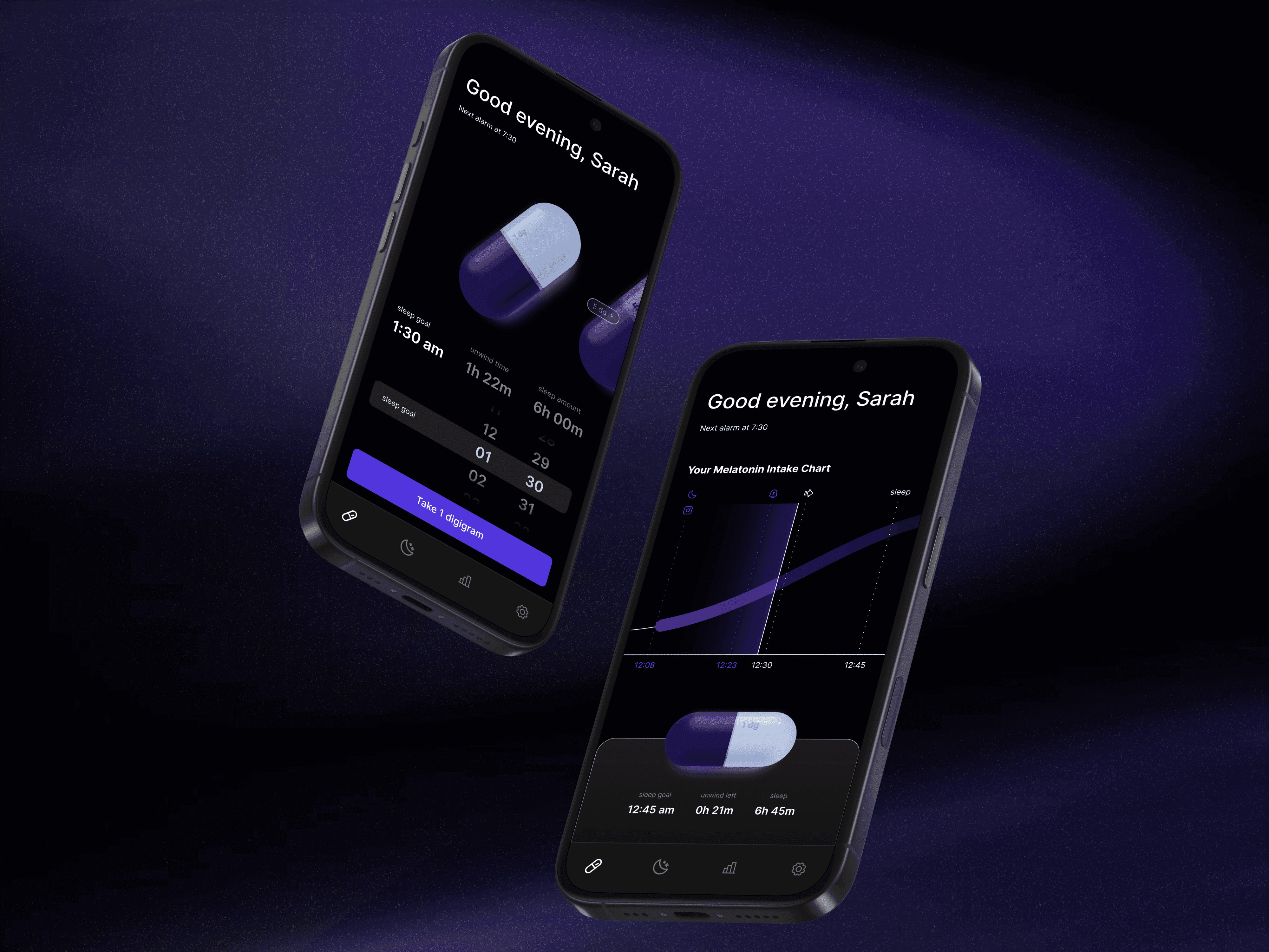
Night Shift is a bedtime app that helps reduce phone usage before sleep. Users select their desired sleep time and choose an intensity level (1, 5, or 10) that determines how strongly the app's features affect phone activity.
The app we came up with
The metaphors
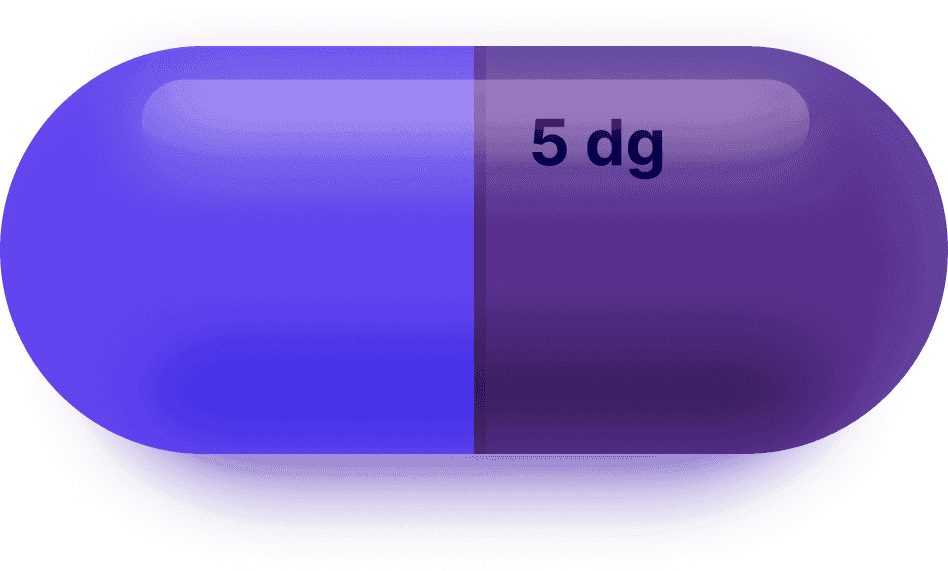
This melatonin is a digital "pill" that activates features to reduce phone use before bedtime.
Digigram (dg) is our playful unit of measurement, like digital milligrams.
Dosage describes the intensity level (1, 5, or 10 dg) that determines which features are activated.
Dosages and features
While each intensity level (1, 5, and 10 dg) comes with preset features, users can customize their experience by editing, disabling, or regrouping features for each dosage.
Product showcase
Onboarding
During onboarding, users are introduced to the concept of Night Shift, and take a quiz or self-prescribe their typical dosage.
Taking Night Shift
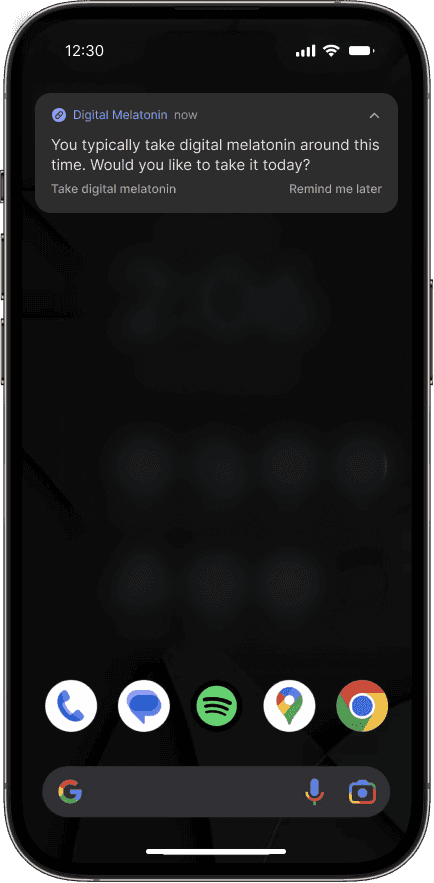
After receiving a notification, users can decide if they want to take Night Shift tonight. If they do, they’ll set a goal and choose a dosage.
Home
On the home screen, they can see a graph of features being activated over the time from the pill intake to sleep goal and options to edit and cancel features.

1 Digigram Features
Short form video tracker
Bedtime routine helper
Gradual dimming
Gradual B&W mode
Timed muted notifs
The short form video tracker is a lightweight feature that overlays social media apps to help users keep track of their short form video intake.
5 Digigram Features
Sleep exercises
Calming content
Reverse snoozing
Sleep exercises interjects bedtime phone usage with increasingly frequent 20-30 second exercises that help relax the body and mind for sleep.

10 Digigram Features
Intentional usage
Exhausted phone mode
Slow battery charging
Intentional usage requires users to set a goal and time limit each time they use an app, making each phone interaction purposeful and time-boxed.
Bedtime Statistics
The statistic tabs provides a weeks overview, with toggles to overlay screen time, sleep, and digital melatonin usage.
THE OUTCOMES
Moonshot 1st Place
On Demo Day, I pitched on behalf of my team, and our project received a unanimous vote from all 4 judges.
My Individual Contributions
UI/UX Design, PMing, Pitching
78 final screens; 11 user flows
Our PM software & SoT (Google Docs)
Storytelling, presentation deck, pitch
That was the TLDR; continue below for details!
Process Overview
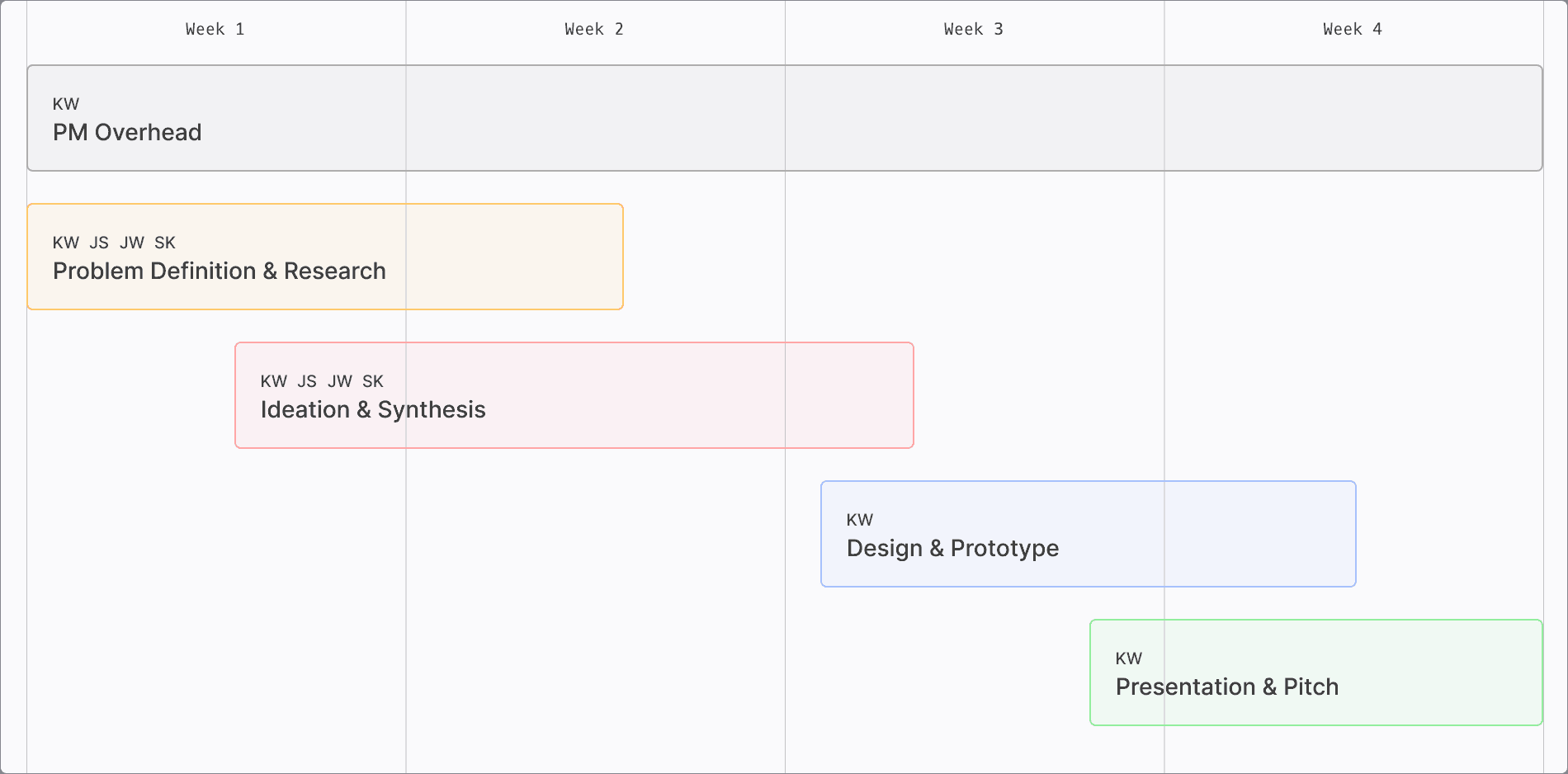
Timeline & Roles
Problem definition
What’s a meaningful project?
I led 2 ideation sessions with the team. We started with 30+ problem spaces and ideas and narrowed it to 11 by voting.
I suggested we plot the 11 ideas on 2 decision matrices and vote for the final problem space based on our interests and abilities.
Secondary Research
Zeroing in on modern-day insomnia
Poor sleep is common and unbiased—it appears across demographics, therefore solutions are impactful and have high social value.
1 in 3 adults in the US don't get enough sleep every day
70M Americans have chronic sleep disorders
46% of people with sleep problems use Panadol and Melatonin
Unsurprisingly, bedtime phone use is one of the culprits. We each struggled with this, and we could easily interview this group at Berkeley.
1 in 3 young adults reported smartphone addiction
93% of Gen Z stay up past bedtime due to their phone
42% of people have poor sleep quality with bedtime phone usage
Competitve Analysis
Existing solutions: What isn’t working?
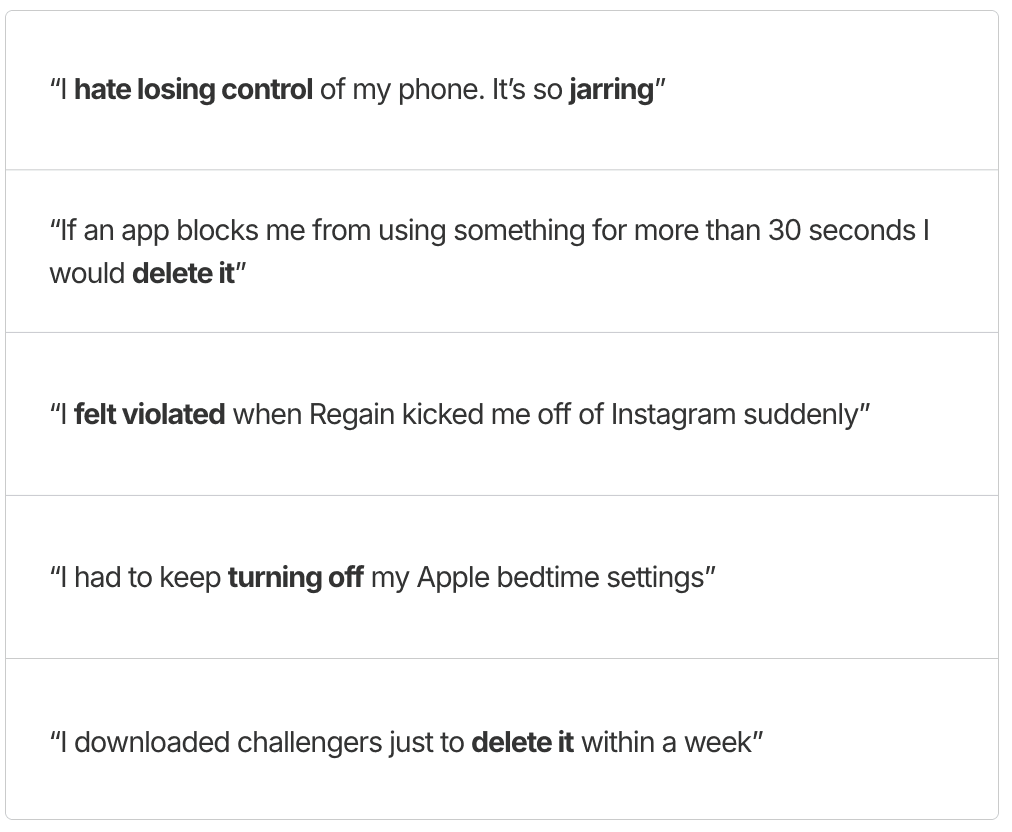
Productivity apps tell us to exclude our phones,
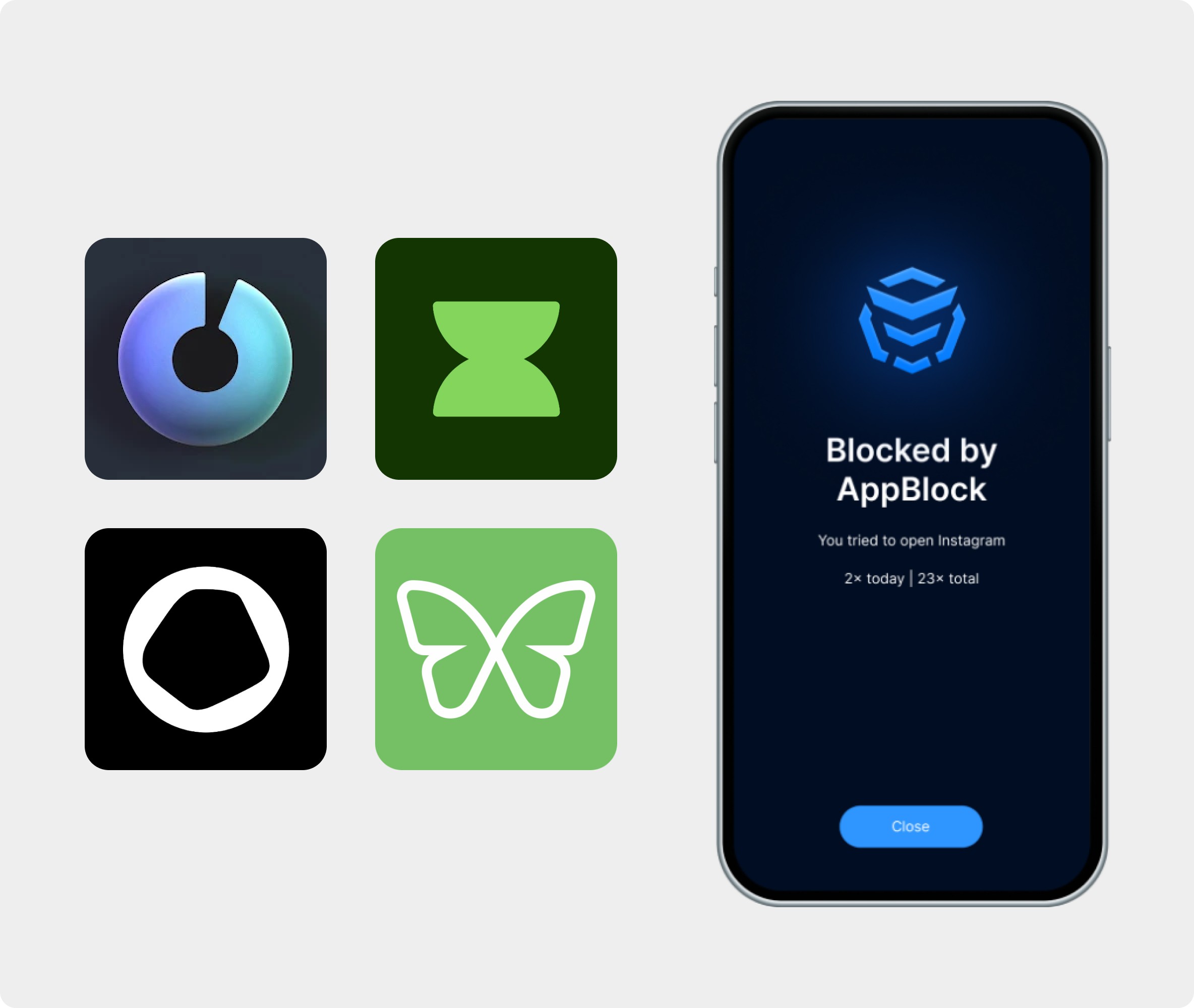
…but it’s not sustainable or realistic for many
“I hate losing control of my phone. It’s so jarring”
“If an app blocks me from using something for more than 30 seconds I would delete it”
“I felt violated when Regain kicked me off of Instagram suddenly”
“I had to keep turning off my Apple bedtime settings”
“I downloaded challengers just to delete it within a week”
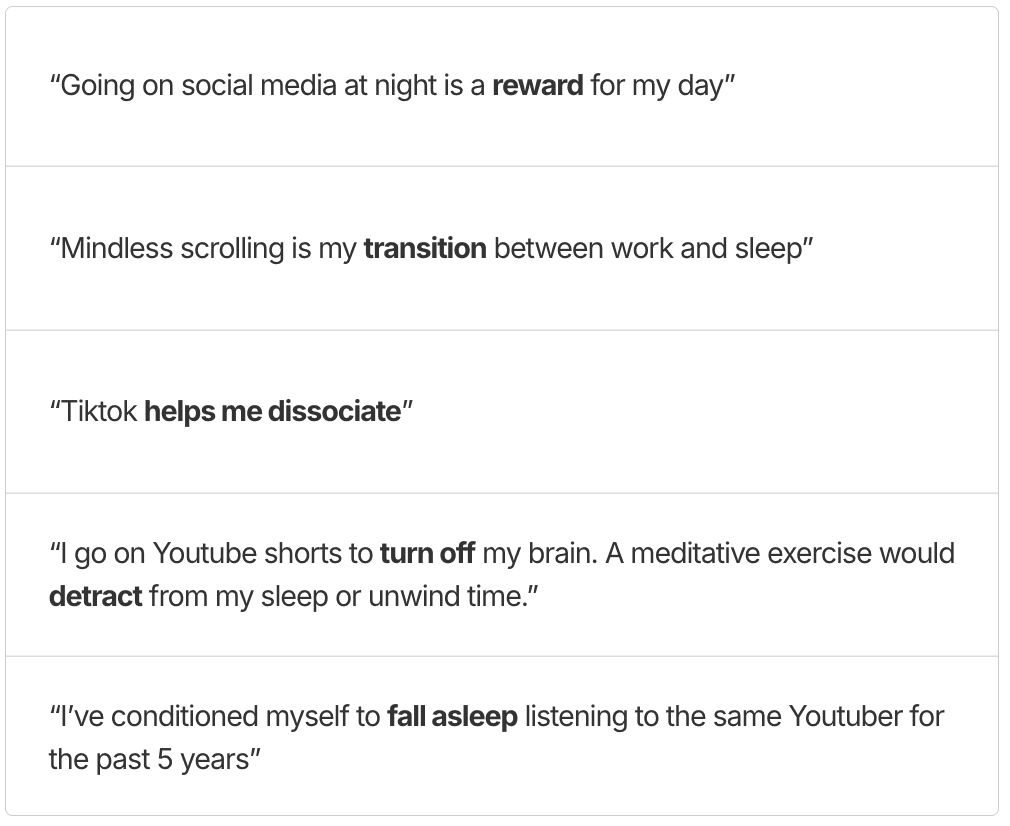
Sleep apps focus on providing activities to add to people’s routines,
…but people already have their own phone routines
“Going on social media at night is a reward for my day”
“Mindless scrolling is my transition between work and sleep”
“Tiktok helps me dissociate”
“I go on Youtube shorts to turn off my brain. A meditative exercise would detract from my sleep or unwind time.”
User interviews
Meet Sarah and Mark, our personas
We collectively conducted 20+ student interviews, 5+ mentor interviews, and 1 professor interview to understand people’s bedtime routines, motivations, and pain points.

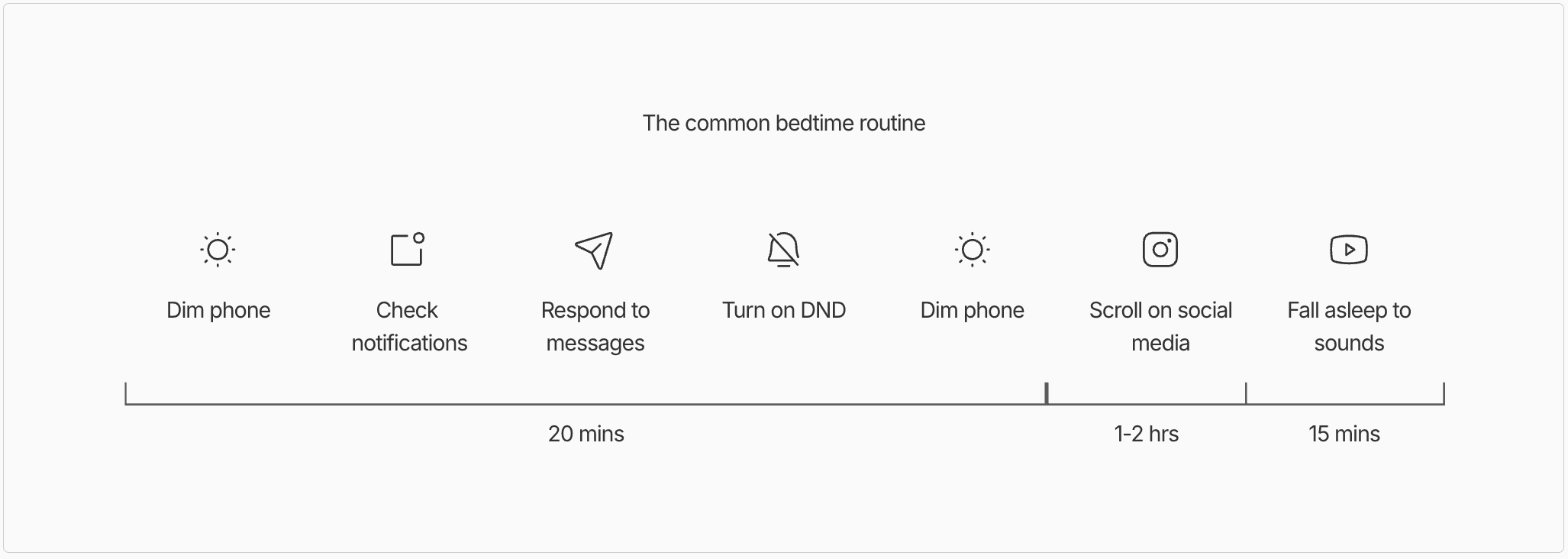
I synthesized our research insights into personas, and averaged their bedtime routines and pain points. This allowed persona-driven design, where we could ideate features and flows for different user groups.
90%
of interviewees identify with Sarah
Sarah
20, Student
Sarah doesn’t plan to change her phone habits drastically and doesn’t like interventions
10%
of interviewees identify with Mark
Mark
28, Adult
Mark actively wants to sleep earlier, reduce phone usage, and appreciates app intervention

Design considerations
Our North Star
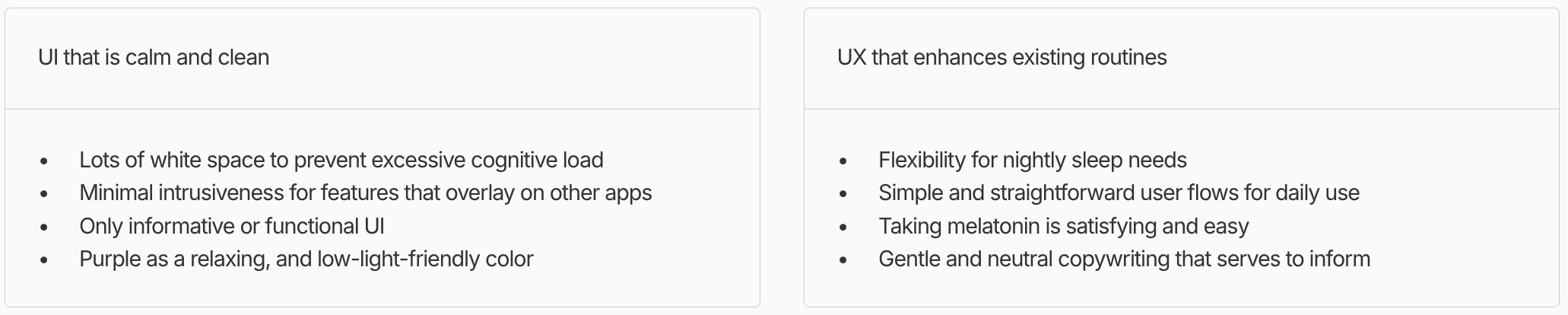
Melatonin heavily inspired our features because its characteristics (unintrusive, gradual, and taken case-by-case) addressed pain points with existing solutions. Here are our UI and UX goals.
Exploring good UX
I also analyzed popular and award-winning apps to develop my design intuition for Digital Melatonin.
Accessibility
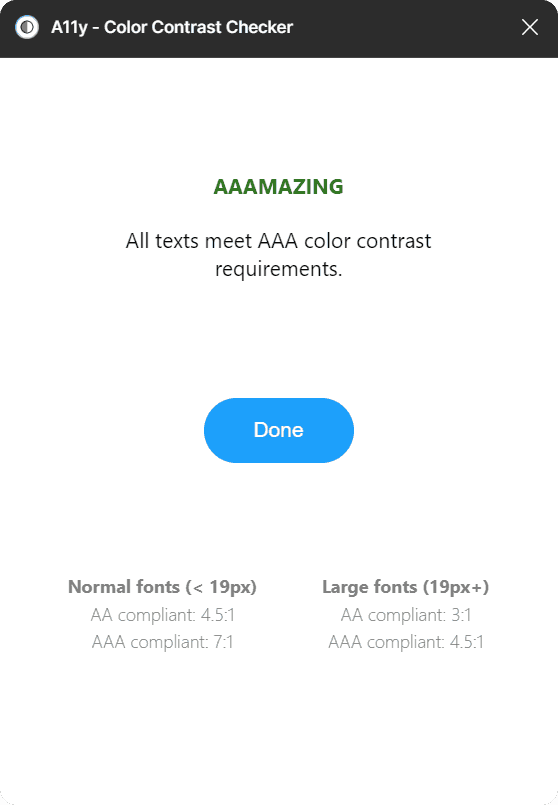
Font size and colors were chosen thoughtfully to pass A11y guidelines, verified by the A11y Figma plugin.
end Credits
The warmest thank yous
This designathon was a huge team effort and I am so grateful for the team. We met for ~2 hours every other day at 9PM for 3 weeks, which was not an easy task while balancing school. I am grateful to everyone who supported us along the way!